
Project

How does the Gulf Stream help the ocean absorb CO₂? | C-Streams

C-Streams

What is it about?

The Gulf Stream is a major ocean current that carries warm water across the North Atlantic. It has an important influence on weather and climate, but it also transports nutrients and carbon. This means the Gulf Stream may affect how much carbon dioxide (CO₂) the North Atlantic can absorb from the atmosphere.

The ocean absorbs around a quarter of the CO₂ released by human activities, helping to slow climate change. The North Atlantic is an important ocean carbon sink, but scientists are still working to understand what controls this carbon uptake and how it may change as the climate warms.

C-Streams is a UK-US research project investigating how the Gulf Stream influences carbon uptake and storage in the North Atlantic. Researchers are tracking water transported northwards by the Gulf Stream, including deeper, older water that is rich in nutrients but contains relatively little carbon produced by human activities.

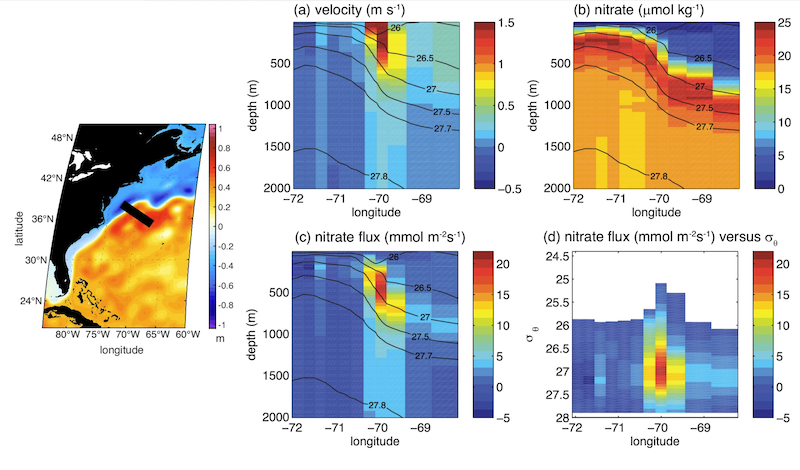
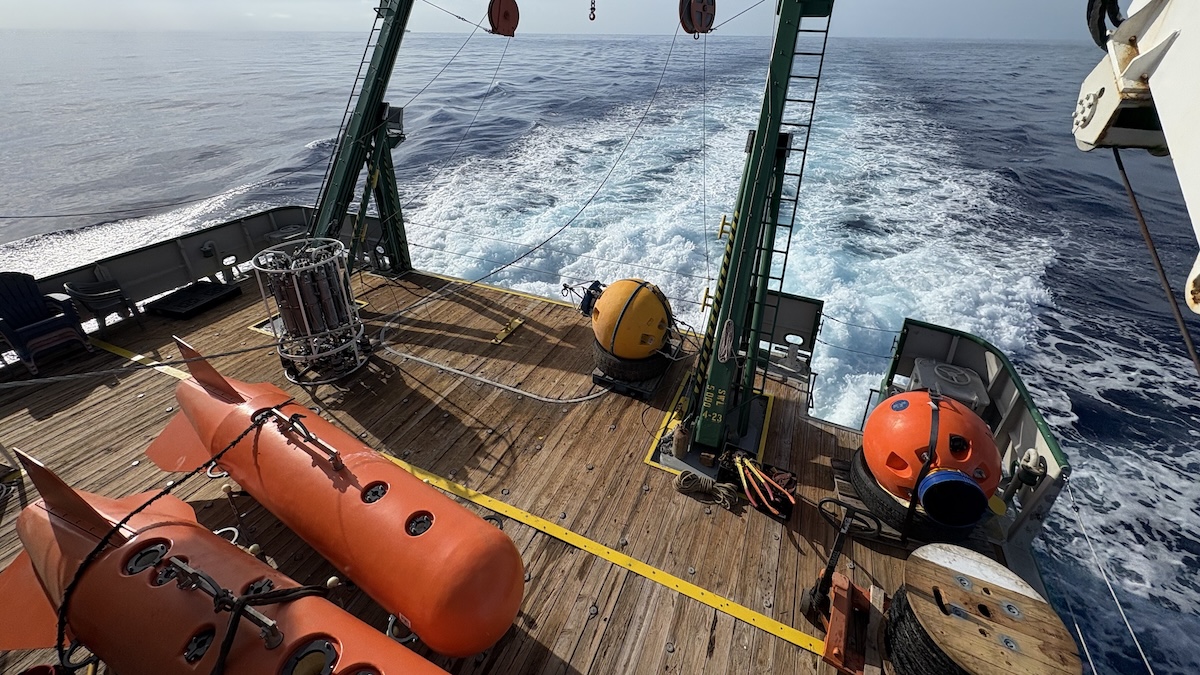
C-Streams combines ocean measurements with robotic gliders, profiling floats, and computer models. Researchers are using these approaches to understand where Gulf Stream waters travel and how currents, eddies, and turbulence mix them. This is revealing how the Gulf Stream transports heat, nutrients, and carbon across the North Atlantic.

Why is it important?

The ocean helps limit climate change by absorbing some of the CO₂ released into the atmosphere. Understanding what controls this ocean carbon uptake, and whether it will continue in future, is important for predicting the pace of climate change.

C-Streams research shows how water transported by the Gulf Stream can influence the North Atlantic carbon sink thousands of kilometres away. These waters carry nutrients that support phytoplankton, microscopic marine organisms that take up carbon as they grow. Some deeper waters also contain relatively little human-produced carbon, giving them the potential to absorb additional atmospheric CO₂ when they eventually reach the surface.

Climate change could alter Gulf Stream circulation, ocean temperatures, mixing, and nutrient supplies. These changes could affect how much CO₂ the North Atlantic absorbs and stores. By explaining the processes that control the North Atlantic carbon sink, C-Streams is providing evidence that can help improve climate models and predictions of future climate change.

Key takeaways

  • The Gulf Stream influences North Atlantic carbon uptake. As well as transporting heat, the Gulf Stream carries nutrients and carbon across the Atlantic, affecting processes that determine how much atmospheric CO₂ the ocean can absorb.
  • The North Atlantic carbon sink is connected across thousands of kilometres. Gulf Stream waters transport nutrients and carbon between different regions, while ocean currents, eddies, and turbulence change these waters along the way.
  • C-Streams can help improve climate predictions. Understanding how the Gulf Stream affects ocean carbon uptake will help scientists assess how the North Atlantic carbon sink could respond to climate change and whether it will continue absorbing large amounts of CO₂.

Perspectives

The impact of the Gulf Stream expands beyond its immediate geographic location. We grow up learning the Gulf Stream is the reason UK has warmer temperatures than equivalent latitudes in Canada. But the Gulf Stream impacts more than just temperature, from ocean nutrients to the carbon cycle. Working with this team of researchers, it has been really interesting to study CO2 uptake and see the vast area that the Gulf Stream influences.

Audience briefings3 total

Resources5 total

Who is involved?