Project

Fynbos Endemic Birds Research

Alan Lee

What is it about?

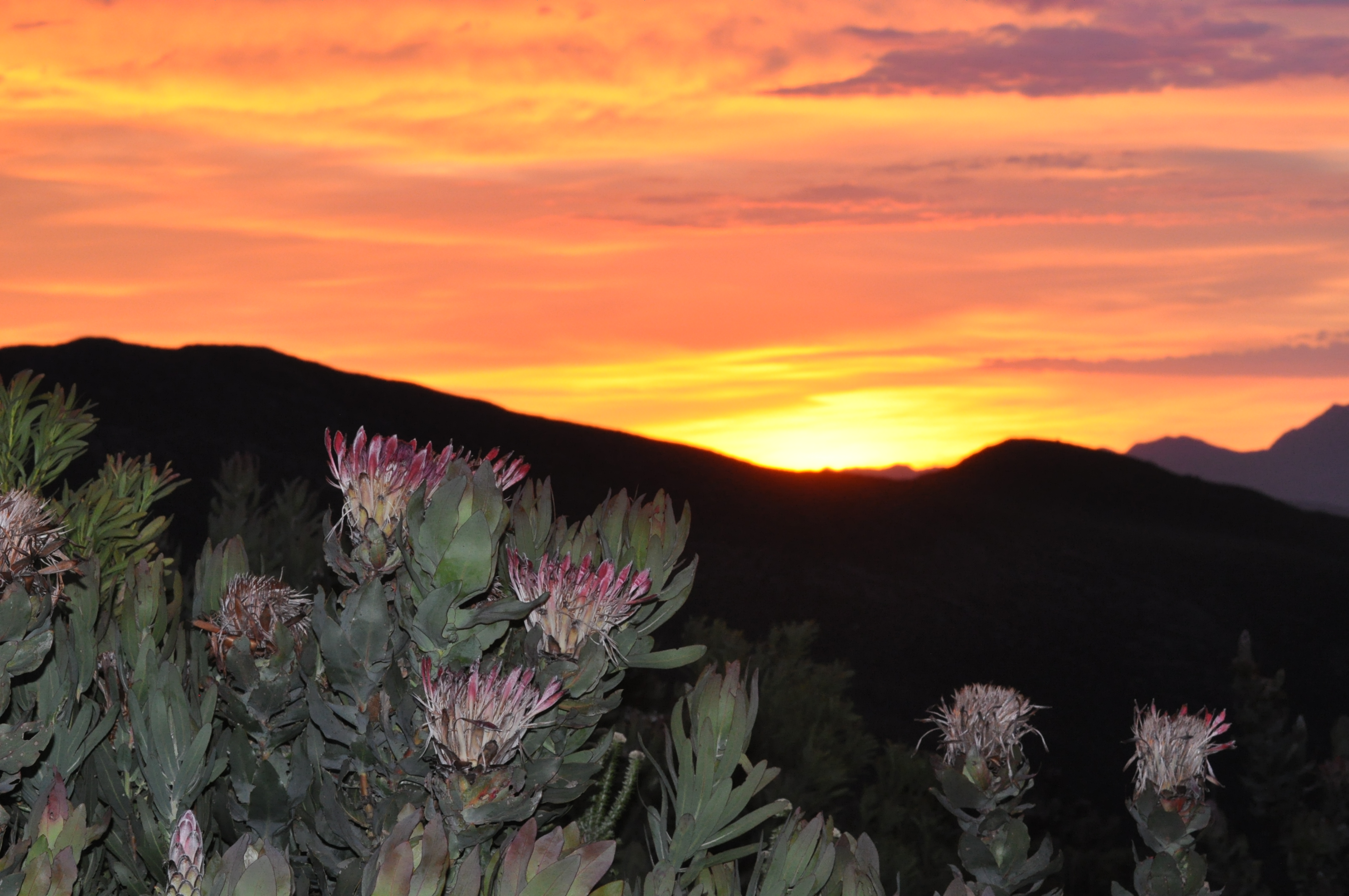
The Fynbos is a unique biome contained found only in South Africa. It is characterised as a Mediterranean type, fire-driven ecosystem, with winter rainfall and poor soil nutrients. There are 7 endemic passerines: 6 found in mountain Fynbos, and the Agulhas Long-billed Lark in lowland renosterveld. There is 1 endemic Turnicid: the Hottentot Buttonquail. This page documents the ornithological research undertaken in this biome since 2012.

Why is it important?

Mountain Fynbos is generally well protected within the protected areas managed by CapeNature, as they are associated with important watersheds. Lowland Fynbos is less well protected, as it is also prime agricultural land: some estimates suggest <5% of lowland Renosterveld remains. In addition to agricultural and urban land transformation, the biome is being transformed by alien vegetation invasions. The biome is extremely vulnerable to climate change as it has no place to move: all climate models point to serious changes, which are already being observed in terms of increased temperature and changes in rainfall.
Perspectives

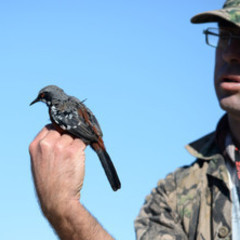
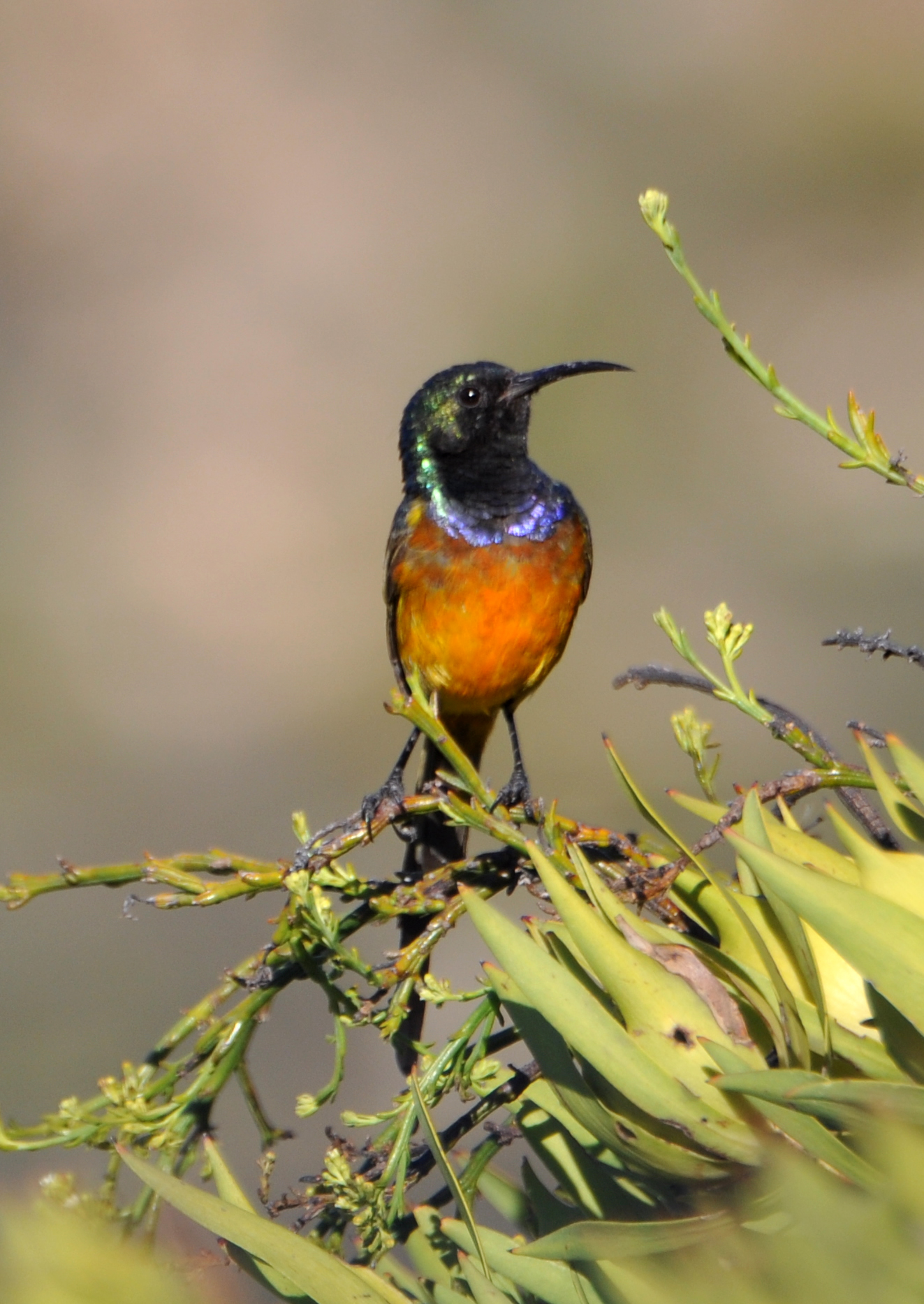
I moved to the Blue Hill Nature Reserve in 2010. The reserve protects 2000 ha of mountain Fynbos, and hosts all the local Fynbos endemic birds. Back then, I was puzzled by the appearance and disappearance of the Cape Sugarbirds. Where did they go? No-one could give me a good answer: "They disappear into the mountains" said Tony Rebelo - but I lived in the mountains and they disappeared from here too! Dr Phoebe Barnard at the South African National Biodiversity Institute was doing ringing around Cape Town with a focus on Fynbos nectarivores, and together we decided a project was required to better understand this set of unique birds, especially after an initial literature review suggested they were less well studied compared to common conspecifics, and that the Southern African Bird Atlas Project suggested range and abundance declines. Phoebe introduced me to the FitzPatrick Institute of Ornithology, where (after a bit of resistance) I was taken on as a Postdoc with legendary Phil Hockey. He unfortunately passed away soon after, and my research was passed into the realm of Peter Ryan. My research would mostly be field based, ground-truthing populations through 2 massive biome wide surveys (by bicycle and on foot), days and days of ringing, dawn-to-dusk days in rocky terrain following rockjumpers, various collaborations and then further on-foot surveys to track down buttonquail. After all this, I continue to feel great concern for these unique and beautiful birds around me: much still needs to be done to understand them and solve the challenges they face.

Resources23 total

Who is involved?