Interview
Oceans as moderators of the carbon cycle and our climate
An article published by Research Features on how the ocean moderates the carbon cycle and climate change.
University of Liverpool Faculty of Science and Engineering
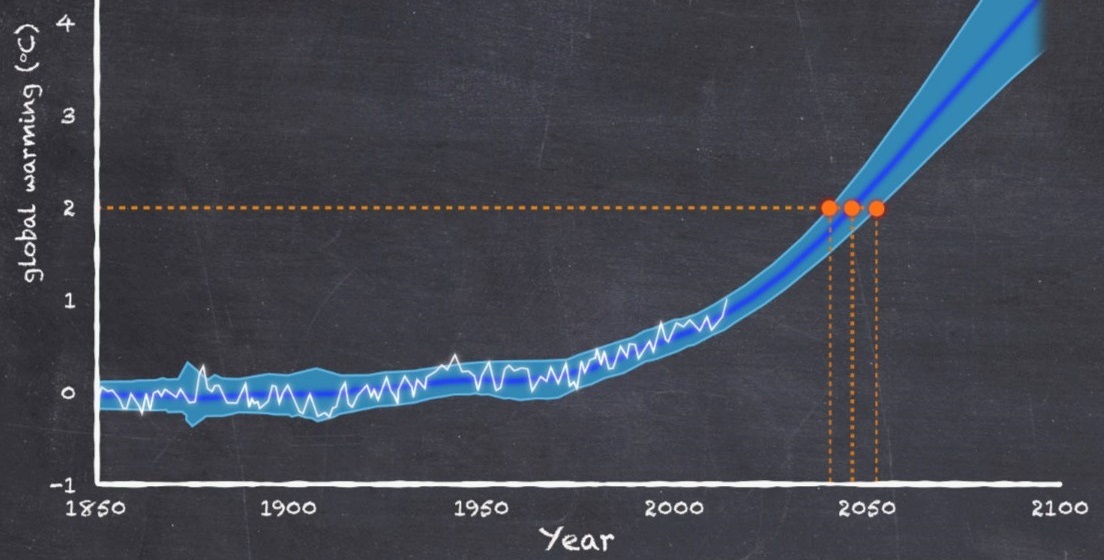
As a society, we urgently need to drastically reduce our carbon emissions in order to minimise the adverse effects of climate change. Through the reduction of global carbon emissions, the 2016 Paris Agreement aims to restrict the rise in global mean surface temperature to 2°C or less, compared to pre-industrial levels. However, there is not a common consensus around how much carbon may actually be emitted before we reach this warming target, which has important implications for regional, national and international policy making worldwide.
Researchers at the Universities of Liverpool and Southampton have used a new approach to reduce the uncertainty of climate projections. Using theory and geological constraints, the team generated a very large ensemble of several thousand projections that closely match historical records for nine key climate metrics, including surface warming and ocean heat content.
By ensuring that their projections were consistent with historical data, the team were able to significantly narrow the uncertainty of surface warming projections and make confident predictions about future climate warming based on future carbon emissions. The team found that at current rates of carbon emission, we will reach 1.5°C of warming in less than 16 years, and we are currently on track to exceed 2.0°C of warming within 30 to 40 years, highlighting the need for urgent and drastic action worldwide.
The research team also looked at the climate’s response after carbon emissions cease by using a coupled carbon-climate Earth system model that was integrated for 1,000 years, with emissions of carbon occurring for the first 98 years. This climate model found that the surface temperature of the planet rises rapidly whilst carbon is being emitted and, critically, that it continues to rise for many centuries after carbon emissions cease.
At a first glance, this continued warming after carbon emissions have ceased may seem surprising but the team were able explain this response using their model by connecting surface warming, ocean heat and carbon uptake, to carbon emissions. The research team found that after emissions cease, surface temperature evolves according to both how much of the emitted carbon remains in the atmosphere and how much of the additional radiative forcing warms the surface rather than the ocean interior.
The model demonstrated that the surface temperature of the planet continues to increase after carbon emissions cease due to a decline in ocean heat uptake, which increases the proportion of radiative forcing warming the surface. Eventually, after many centuries, surface temperature declines as the excess atmospheric carbon dioxide is taken up by the ocean and land. This model provides fresh insight into the importance of limiting our emissions now, as the runaway effects of the carbon we emit today will be felt for hundreds of years to come.
Further research in collaboration with Imperial College London has examined why there are differences in the warming projections from the latest climate models for a given emission of carbon. To understand the reasons behind these different projections, the researchers identified the relative importance of the climate feedbacks, heat uptake and carbon cycling.
The team found that for a given carbon emission, intermodel differences in the climate feedbacks and heat uptake are more important than differences in how the models take up carbon. In particular, intermodel differences in cloud feedbacks on the incoming and outgoing radiation are important in determining differences in the surface warming for a given carbon emission.
To successfully meet the Paris Agreement target, we first must know how much carbon we may emit and the timescale those emissions can take place over. This body of research has provided key insights into narrowing the quantities of carbon we may emit before reaching 1.5°C or 2°C warming and highlights the urgent need to act now. We need to develop and adopt technologies that allow us to rapidly move towards a more carbon-efficient or carbon-neutral future, as this research confirms that we only have a limited window of time to act before reaching these warming targets.
It’s equally vitally important that we understand the response of climate models to the amounts of carbon emitted being emitted into our atmosphere today and the long-term effects these emissions have. This research provided a model to understand the climate model response in terms of atmospheric and oceanic properties, and reconciled two different ongoing ways of understanding the climate response.
By investigating the differences in warming projections given by the latest climate models for a fixed amount of carbon, this research found that the most important factor which governs warming is the radiative effects of clouds. The team also found that the way in which the ocean takes up heat, and differences in how the land and ocean take up carbon, also contribute to the difference in the warming projections made by the latest climate models.
The more carbon we emit, the warmer our climate system becomes. We have less than two decades before reaching a global temperature rise of 1.5°C, and perhaps three to four decades before reaching 2°C. We need to mitigate against the adverse effects of this expected temperature rise, as well as reduce our carbon emissions towards net zero in order to minimise the global temperature rise.
Individuals can make a difference in terms of behavioural change in reducing carbon emissions, but this effect can only go so far, as we can see in terms of the changes in global carbon emissions linked to COVID-19. As well as behavioural change, we need to reduce the carbon emissions associated with our energy storage and usage, both in the work place and at home. Tackling this challenge require a concerted effort by governments, city regions, industry and places of work, as well as individuals, in providing cleaner and more sustainable solutions for our future.
Without concerted effort, in one to two decades, we will instead be discussing how to cope with living with a warmer world and how to avoid exceeding much higher temperature targets.
University of Liverpool Department of Earth Ocean and Ecological Sciences
An article published by Research Features on how the ocean moderates the carbon cycle and climate change.
Press release for ‘Pathways to 1.5 and 2 °C warming based on observational and geological constraints’ Nature Geoscience research paper.
Professor Ric Williams considers how Covid-19 affects the UK’s progress towards the Paris Climate Agreement and reaching net-zero emissions by 2050.
Environmental Research Letters article on controls of the Transient Climate Response to Emissions by physical feedbacks, heat uptake and carbon cycling.
Clouds can act as both blanket and parasol – warming our atmosphere at the same time as cooling it. But which effect will dominate?
Professor Ric Williams says that while the pandemic has taught us that drastic cuts in emissions are possible, we now need to take radical action.
Discover how the University of Liverpool is responding to the global climate crisis through research into science, society and solutions.