
Publication
BMJ article: The Journal for ImmunoTherapy of Cancer
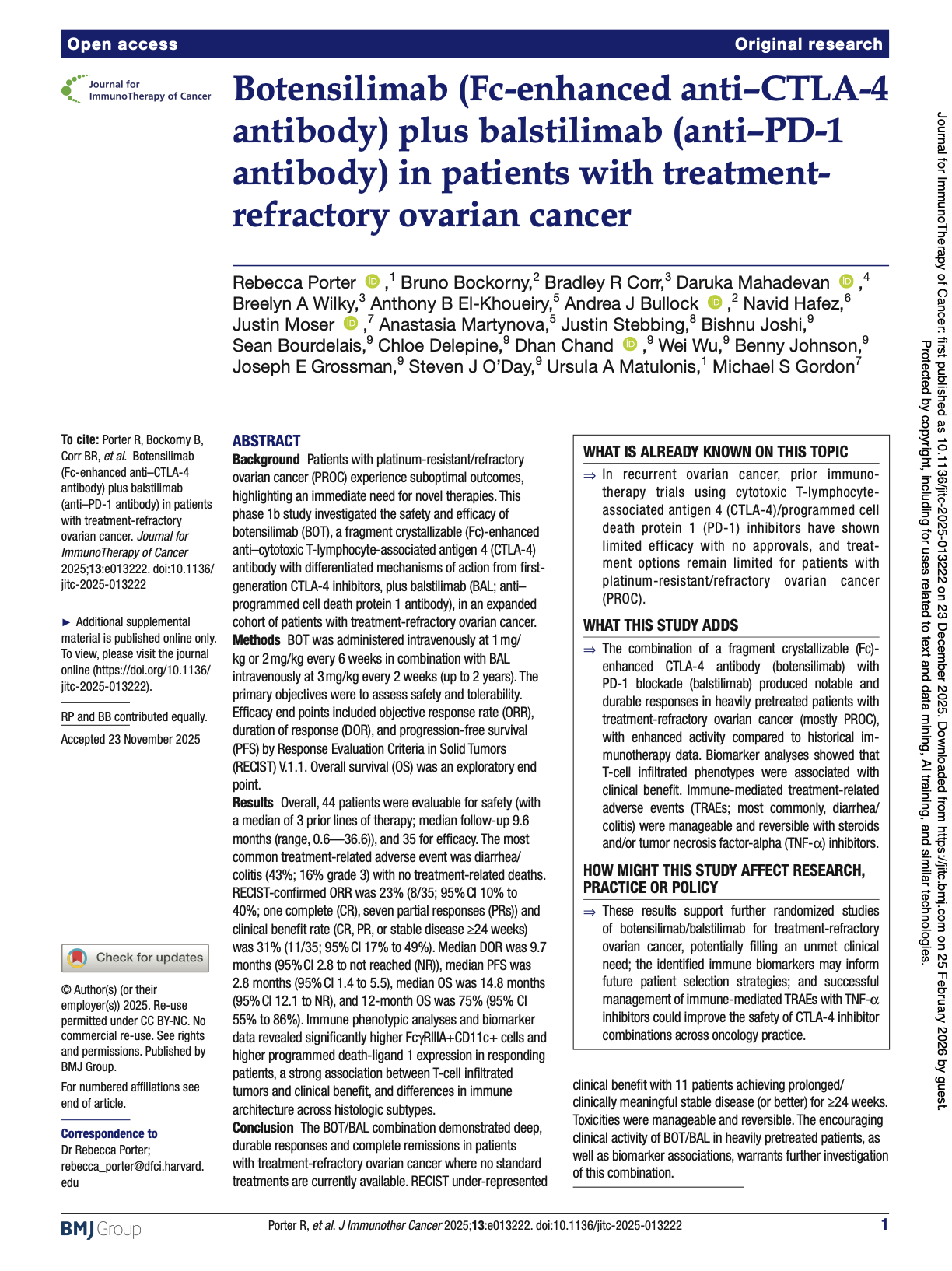
Botensilimab (Fc-enhanced anti–CTLA-4 antibody) plus balstilimab (anti–PD-1 antibody) in patients with treatment-refractory ovarian cancer
Agenus

This clinical trial studied a new immunotherapy combination called BOT+BAT for people with advanced cancers. BOT (botensilimab) and BAT (balstilimab) are two immune-based medicines designed to help the body’s immune system recognize and attack cancer cells. Balstilimab targets PD-1, a well-known immune checkpoint, while botensilimab targets CTLA-4, another immune checkpoint, but in a modified way that may stimulate a stronger immune response.
The study was an early-phase (phase I) clinical trial. Early-phase trials mainly test safety, determine appropriate dosing, and look for early signs that a treatment may work. Patients in this study had advanced solid tumors, and many had already received several prior treatments. Some had cancers that typically do not respond well to existing immunotherapies.
The main goal of the trial was to evaluate safety. The combination did cause side effects, most commonly diarrhea and inflammation of the colon (colitis), fatigue, and skin reactions. These types of side effects are common with immune checkpoint inhibitors. Most side effects were manageable with standard treatments such as steroids, although some patients experienced more serious immune-related reactions.
Researchers also looked at whether tumors shrank or stopped growing. A meaningful number of patients experienced tumor shrinkage, and some responses lasted a long time. Importantly, activity was seen in certain tumor types that usually respond poorly to standard immunotherapy. This suggests that the modified CTLA-4 antibody (botensilimab), when combined with balstilimab, may create a stronger or broader immune response than older combinations.
Why is this important? Many patients with advanced cancers eventually run out of effective treatment options, especially if their tumors do not respond to current immunotherapies. The results of this study suggest that the BOT+BAT combination could offer a new approach for some of these patients. Larger, later-stage trials are needed to confirm the benefits and better understand which patients are most likely to respond.
This is a demo page.
Botensilimab (Fc-enhanced anti–CTLA-4 antibody) plus balstilimab (anti–PD-1 antibody) in patients with treatment-refractory ovarian cancer
BOT + BAL is a combination of two medicines designed to help the body’s immune system fight cancer more effectively. The immune system is the body’s natural de…


