Publication
HPV Episome Levels are Potently Decreased by Pyrrole-Imidazole Polyamides
Human papillomavirus (HPV) causes cervical cancer and other hyperproliferative diseases. There currently are no approved antiviral drugs for HPV that directly d
James Bashkin

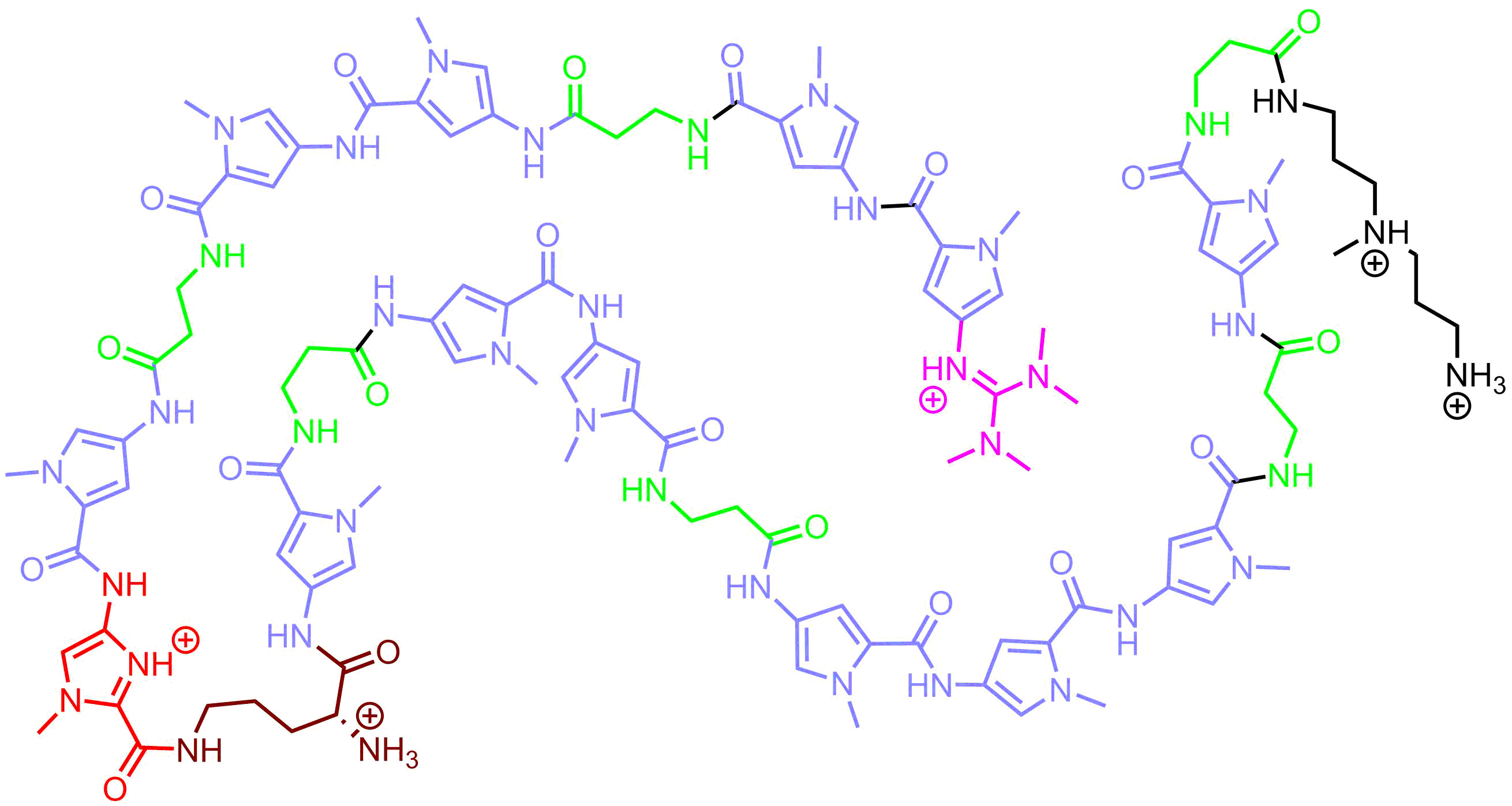
By harnessing long, hairpin, pyrrole-imidazole polyamides to bind AT-rich viral genomes in episomal form and causing their enzymatic degradation via the DNA Damage Response, we have the possibility of greatly decreasing viral titers and preventing virally-derived diseases such as cancer.
Small DNA tumor viruses such as human papillomavirus, or HPV, cause a large number of deaths every year through a variety of cancers. There are no specific antiviral agents to treat these diseases and our discoveries may fill that void.
We have discovered a wide range of active antiviral compounds for HPV and medically-significant polyomaviruses, some of which have gone through preclinical testing in rats and rabbits with good results. We have also obtained initial information on their mechanisms of action, though more work remains to be done. The compounds are active at low nanomolar levels and show no cytotoxicity up to their solubility limits, above 100 micromolar. This has been a collaborative project and all contributors are acknowledged as coauthors or coinventors.

University of Missouri-St. Louis
Human papillomavirus (HPV) causes cervical cancer and other hyperproliferative diseases. There currently are no approved antiviral drugs for HPV that directly d
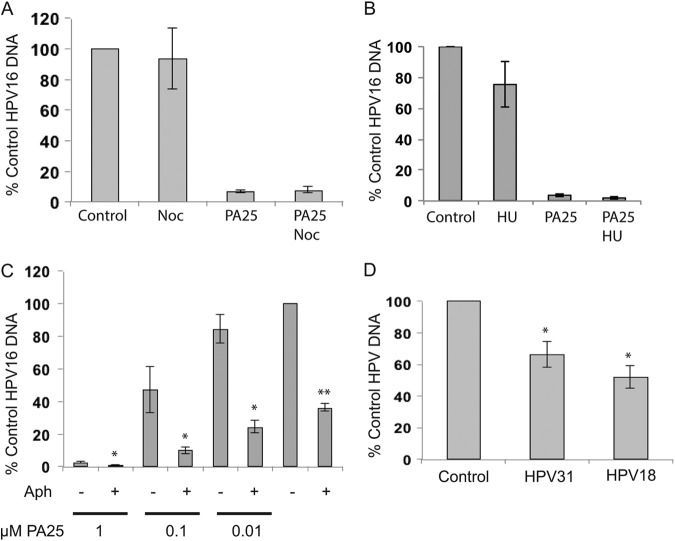
A highly reproducible quantitative PCR (Q-PCR) assay was used to study the stability of human papillomavirus (HPV) in undifferentiated keratinocytes that mainta
Results are incompatible with reported DNA recognition rules, e.g., molecules recognizing the same DNA seqs. were both active and inactive vs. HPV.
A perspective on polyamides as antiviral agents. DOI: 10.4155/fmc.15.120
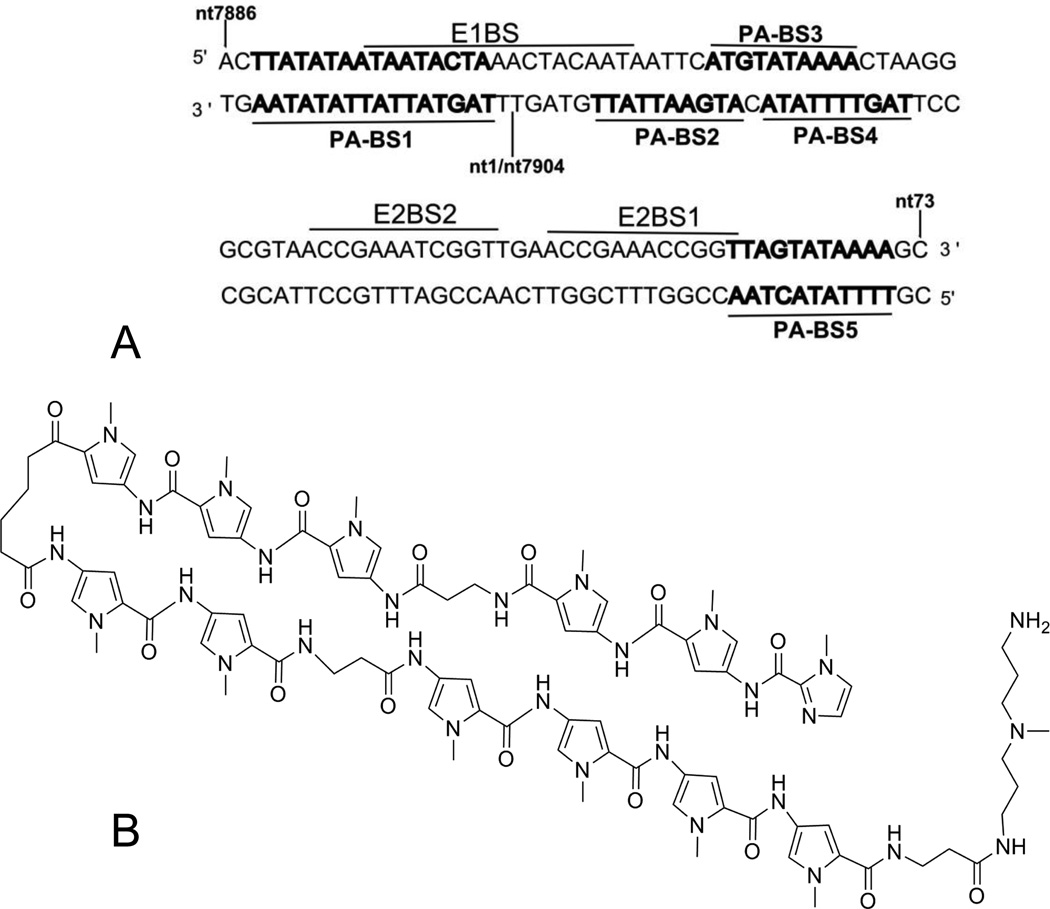
Described are the interactions of two anti-HPV polyamides with DNA in the long control region of HPV16 (7348-122). Many unexpected binding sites were found.
Anti-HPV compound PA1, binding to either an ATAT/TATA or an AAAA/TTTT DNA sequence, is consistently entropically, not enthalpically driven.
In DNA binding stoichiometry experiments, all hairpin PAs except the 6-ring bind with at least two PAs per isolated recognition site.
Introduction of N-terminal guanidinium improves antiviral activity of hairpin polyamides when compared to an unsubstituted analog
Methods for treating papillomavirus infection relates to hairpin and other polyamide compositions and therapies for treating cells infected with papillomavirus.
Compounds for treating papillomavirus infection. The invention provides polyamides, polyamide compositions, and methods for treating HPV infected cells.
The present invention relates to polyamide compositions and therapies for treating cells and subjects infected with papillomavirus.
Polyamides containing gamma-aminobutyric acid. This invention relates to polyamide compositions & therapies for treating cells infected with papillomavirus.
Polyamides for treating human papillomavirus. The invention provides polyamides and analogs useful for treating HPV infections and other diseases.
LARGE ANTIVIRAL POLYAMIDES ACTIVE AGAINST HUMAN PAPILLOMAVIRUS TYPES 16, 18, AND 31 |a collection of papers and presentations
CELLULAR UPTAKE OF POLYAMIDES, ESPECIALLY FOR CANCER CELL LINES | the first work done on cellular uptake of polyamides (don't believe everything you read!)
BIOPHYSICS OF POLYAMIDE-DNA INTERACTIONS | With CM Dupreur and W David Wilson
NEW DNA-POLYAMIDE BINDING RULES: SMALL HAIRPIN POLYAMIDES | modifications and changes to the polyamide pairing rules, with W David Wilson and Cynthia M Dupureur
BIOPHYSICS OF LARGE ANTIVIRAL POLYAMIDE-DNA INTERACTIONS | with Cynthia M Dupureur
The action of antiviral polyamides (AVP) on polyomaviruses: a single treatment with AVP protected SV40-infected BSC-1 cells from cytopathic effects for 11 days