What is it about?
Precision positioning stages normally pair an actuator with a separate, often bulky, displacement sensor. We designed a monolithic piezoelectric stage with self-sensing: the same piezo elements that drive the motion also report the position, eliminating external sensors. The work covers the full engineering cycle — mechanism design, modeling of the coupled electromechanical dynamics, calibration of the self-sensing signal against reference measurement, and compensation of piezoelectric hysteresis that would otherwise corrupt the position estimate.
Featured Image
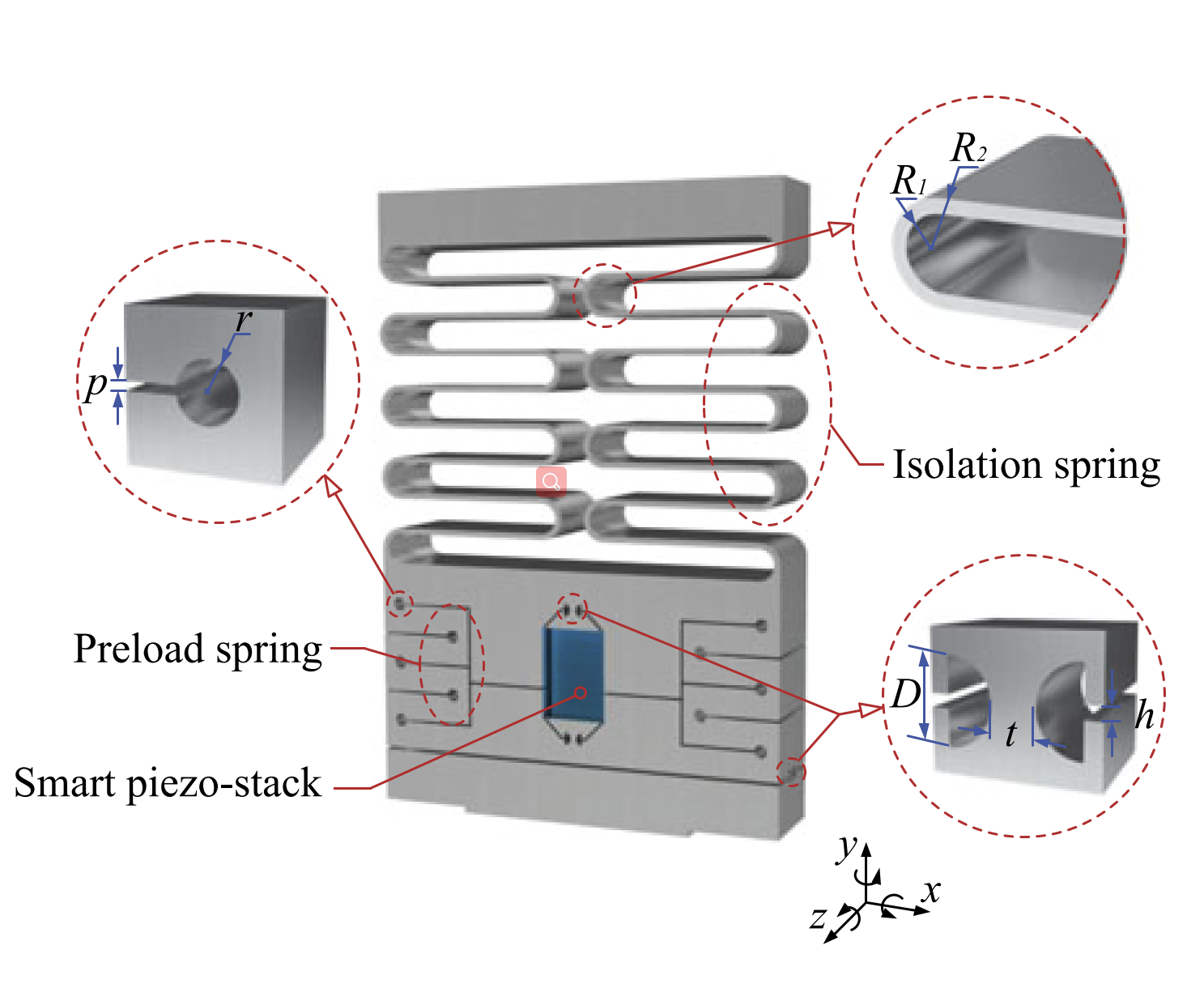
Photo by on Unsplash
Why is it important?
Removing displacement sensors cuts cost, size, and alignment complexity in precision stages used for microscopy, lithography, and nanopositioning. Self-sensing turns the actuator into its own metrology, a meaningful simplification wherever stage volume and cost are constrained.
Perspectives
Teaching an actuator to feel its own motion was equal parts signal processing and humility — the piezo's memory (hysteresis) had to be understood before it could be trusted as a sensor.
Professor Wei Li
Huazhong University of Science and Technology
Read the Original
This page is a summary of: A Monolithic Self-Sensing Precision Stage: Design, Modeling, Calibration, and Hysteresis Compensation, IEEE/ASME Transactions on Mechatronics, April 2015, Institute of Electrical & Electronics Engineers (IEEE),
DOI: 10.1109/tmech.2014.2306231.
You can read the full text:
Contributors
The following have contributed to this page







