What is it about?
Controlled flight for centimeter-scale robots is throttled by propulsion weight. This paper — presented at ICRA 2024 — demonstrates microrobotic flight enabled by ultralight ion thrusters with high thrust-to-weight ratio and low fabrication cost. We document the thruster design, manufacturing process, and flight tests showing sustained lift with margin for control, establishing ion propulsion as a practical option for palm-scale flying robots.
Featured Image
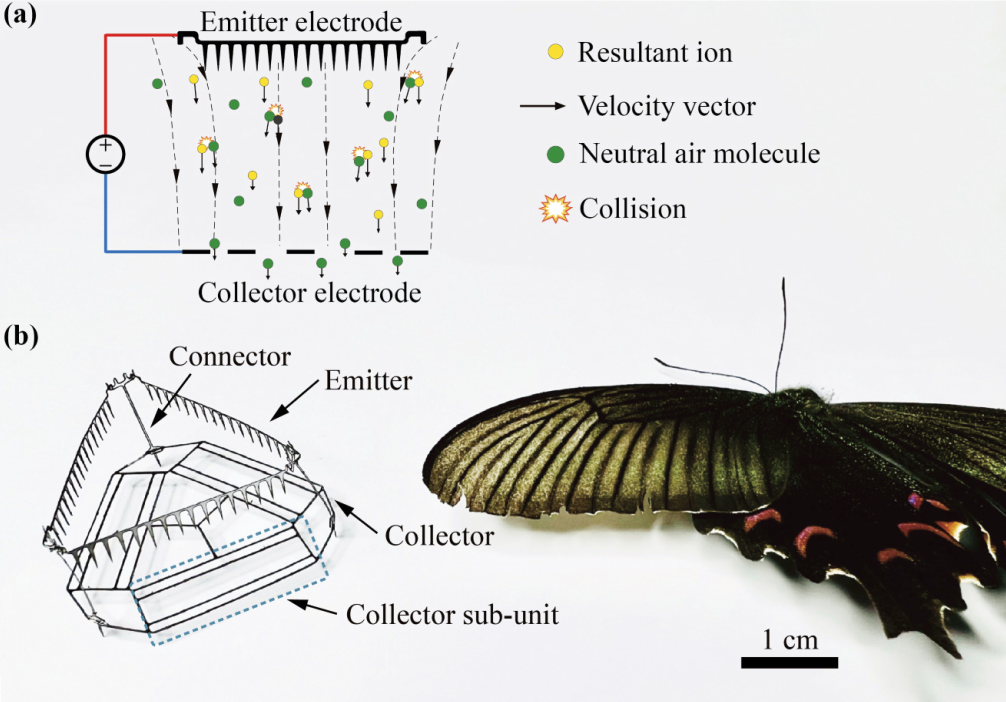
Photo by on Unsplash
Why is it important?
ICRA is where robotics ideas face the harshest audience. Presenting ion-thruster flight there marked the moment the approach stopped being exotic and started being an option on every microrobot designer's list.
Perspectives
Insect-scale flying microrobots are constrained by heavy actuators and complicated manufacturing. Gu et al. demonstrate microrobotic flight enabled by ultralight ion thrusters featuring high thrust-to-weight ratio and low fabrication cost. The ion thruster removes moving mechanical parts and simplifies assembly, producing sufficient thrust to lift the micro air vehicle. This work validates low-cost ion propulsion for microflight robots and lays the groundwork for deployable, lightweight insect-sized aerial robotic platforms.
Professor Wei Li
Huazhong University of Science and Technology
Read the Original
This page is a summary of: Microrobotic Flight Enabled by Ultralight Ion Thrusters with High Thrust-to-Weight Ratio and Low Fabrication Cost, May 2024, Institute of Electrical & Electronics Engineers (IEEE),
DOI: 10.1109/icra57147.2024.10611166.
You can read the full text:
Contributors
The following have contributed to this page







