What is it about?
Piezoelectric actuators wander from their commanded position because of hysteresis — worse, the hysteresis is asymmetric and changes with operating speed. We developed a modified Bouc-Wen model capturing this asymmetric, rate-dependent behavior, then built a digital inverse controller around it, cascaded in the feedforward path. To absorb modeling errors and parameter drift, the inverse controller is paired with a feedback loop in a hybrid scheme. Experiments showed significantly reduced tracking errors compared to conventional compensation.
Featured Image
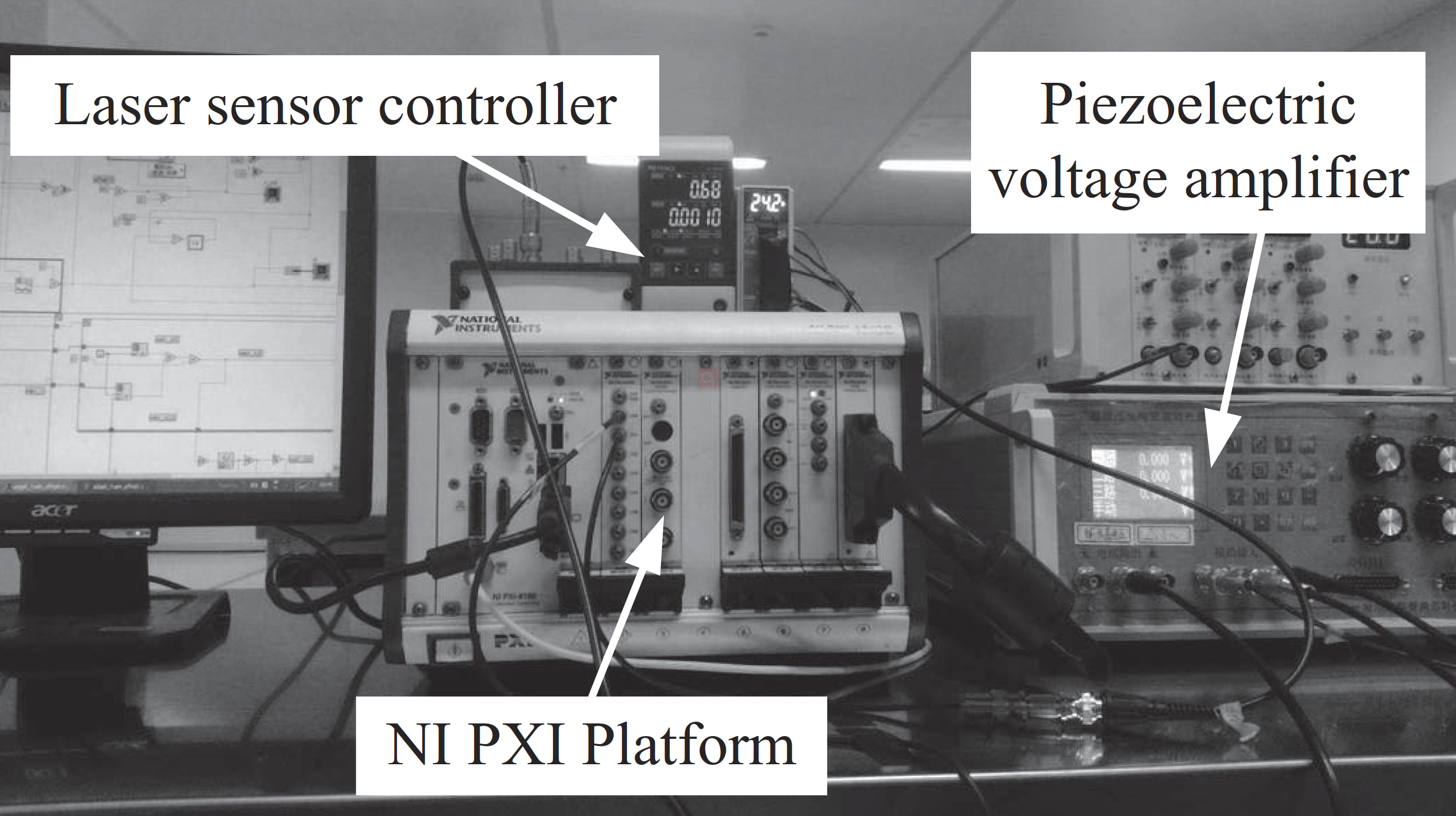
Photo by on Unsplash
Why is it important?
Precise piezo motion underpins nanopositioning, AFM, and precision manufacturing. Compensation that respects the true asymmetric, rate-dependent character of hysteresis delivers accuracy that symmetric models cannot — at little added computational cost.
Perspectives
Hysteresis is the piezo actuator's stubborn memory. Modeling it as asymmetric and rate-dependent felt pedantic — until the tracking errors collapsed.
Professor Wei Li
Huazhong University of Science and Technology
Read the Original
This page is a summary of: Inverse compensation for hysteresis in piezoelectric actuator using an asymmetric rate-dependent model, Review of Scientific Instruments, November 2013, American Institute of Physics,
DOI: 10.1063/1.4833399.
You can read the full text:
Contributors
The following have contributed to this page







