What is it about?
Weighing something as light as a single molecule normally requires extreme cooling and complex apparatus. We achieved room-temperature single-molecule mass detection using a ZnO nanowire resonator under feedback control. Instead of letting the nanowire ring down and analyzing decaying signals, feedback keeps it oscillating continuously; when a molecule lands, the frequency shifts instantly and can be tracked in real time. This turns a fragile laboratory measurement into a robust, continuous readout — a practical route to compact mass spectrometry of individual molecules.
Featured Image
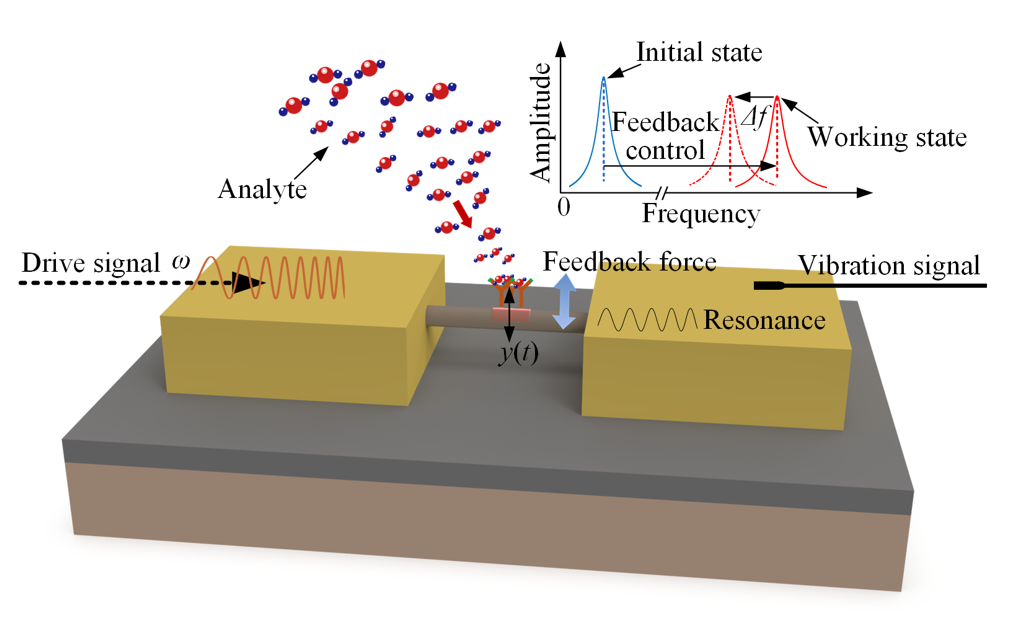
Photo by on Unsplash
Why is it important?
Removing the cryogenic and pulsed-measurement overhead from nanomechanical mass sensing is what makes single-molecule detection deployable. Continuous-feedback operation means the sensor never blinks — every landing molecule is counted, at room temperature, on a chip.
Perspectives
The first time the frequency jumped exactly when a molecule should have landed, we stopped breathing. Then it happened again, and again — and we knew feedback control had just made single-molecule sensing routine.
Professor Wei Li
Huazhong University of Science and Technology
Read the Original
This page is a summary of: Room-Temperature Single-Molecule Mass Detection via Feedback Control of ZnO Nanowire Resonator, ACS Applied Materials & Interfaces, May 2025, American Chemical Society (ACS),
DOI: 10.1021/acsami.5c06688.
You can read the full text:
Contributors
The following have contributed to this page







