What is it about?
Traumatic brain injury risk depends on the intensity and direction of head impacts, yet most assessments remain observational. We used flexible wearable sensors to evaluate head impact intensities and accelerations quantitatively, capturing linear and rotational loading during real activities. The thin, conformable sensors record impact profiles continuously, giving coaches and clinicians objective data to inform return-to-play and safety decisions.
Featured Image
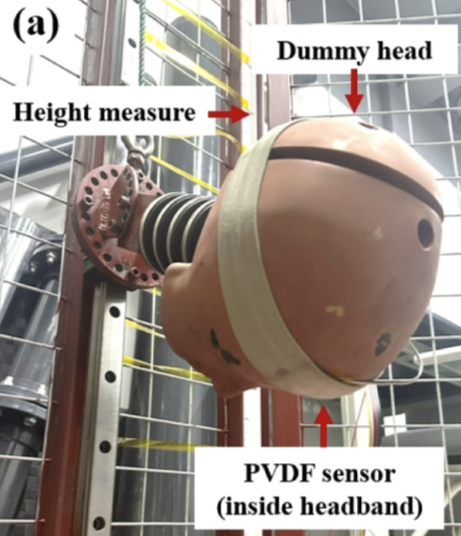
Photo by on Unsplash
Why is it important?
Turning 'that looked like a hard hit' into measured acceleration data changes how brain-injury risk is managed at every level of sport. Objective numbers make prevention policies enforceable and meaningful.
Perspectives
Every dataset of real head impacts is uncomfortable to collect and invaluable to have. This work exists because protecting heads starts with measuring them.
Professor Wei Li
Huazhong University of Science and Technology
Read the Original
This page is a summary of: Evaluating head impact intensities and accelerations using flexible wearable sensors for traumatic brain injury assessment, Sensors and Actuators A Physical, August 2024, Elsevier,
DOI: 10.1016/j.sna.2024.115443.
You can read the full text:
Contributors
The following have contributed to this page







