What is it about?
Shape-memory hydrogels can deform and recover on cue, but controlling when recovery happens has been a stubborn challenge. We introduced silk fibroin as a regulator in composite hydrogels, and by adjusting its content we tune the recovery time across a wide, predictable range. The silk fibroin network slows water diffusion and stress relaxation in a controllable way, giving the material an adjustable internal clock. This transforms shape-memory hydrogels from a fixed-response material into a programmable one, with direct relevance to soft robotics, drug delivery, and tissue engineering.
Featured Image
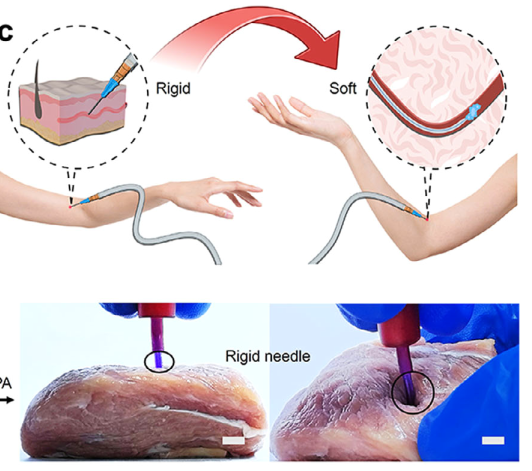
Photo by on Unsplash
Why is it important?
Programmable timing is the missing ingredient in many soft-actuator and drug-release designs. A hydrogel whose recovery time can be dialed in — simply by tuning composition — turns temporal control into a material parameter rather than an afterthought.
Perspectives
Silk has been an engineering gift to humanity for millennia; here it quietly sets the tempo of a hydrogel. Watching recovery time stretch and compress with silk content felt like tuning an instrument.
Professor Wei Li
Huazhong University of Science and Technology
Read the Original
This page is a summary of: Silk Fibroin‐Regulated Shape Memory Composite Hydrogels with Tunable Recovery Time, Advanced Functional Materials, December 2025, Wiley,
DOI: 10.1002/adfm.202531055.
You can read the full text:
Contributors
The following have contributed to this page







