Publication
Microplastic Intake, Its Biotic Drivers, and Hydrophobic Organic Contaminant Levels in the Baltic Herring
Microplastic (MP) ingestion is not related to bioaccumulation of hydrophobic organic contaminants (HOCs) in the Baltic herring.
Elena Gorokhova
Project team: Elena Gorokhova, Hoishing Lo, Zandra Gerdes, Sophia Reichelt (ACES) Nazdaneh Yarahmadi, Ignacy Jakubowicz, Jonas Enebro (RISE) Martin Ogonowski (SLU) Hanna Karlsson, Andrea Montano Montes (Karolinska Institutet) The current environmental concern is that plastic debris is ingested by aquatic biota, and plastic transfer through the food web could affect aquatic consumers, including humans as the top consumers. The uptake of MP by humans can occur through terrestrial and aquatic food products and drinking water. Recently, concerns have also been raised that inhaled plastic particles may induce lesions in the respiratory system depending on individual susceptibility and particle properties. This pathway is more hazardous than the ingestion of microplastic. However, the evidence for the biological effects of microplastic is scarce, and the mechanisms of the effects specific for microplastic in both aquatic biota and humans are largely unknown.
Possible impacts of microplastic pollution on the environment and human health need to be assessed with scientific rigor, starting with including particle morphology and physicochemical properties in the analysis and establishing adequate test systems for biological effects.
Although there is much progress in plastic identification and abundance analysis driven by recent funding and research efforts worldwide, the risk assessment remains difficult. Ambiguous statements like "potentially harmful" or "could be hazardous" are often used to mislead policymaking. The risks posed by microplastic have often been derived from ill-conceived experiments, with the exposure concentrations orders of magnitude higher than environmentally plausible levels of these pollutants. The artifacts of such designs are unavoidable, and, given the poor understanding of the effect mechanisms and lack of methodology for risk assessment, it is virtually impossible to provide recommendations for legislation and to support ecosystem management with threshold values representing environmentally acceptable levels of MP. This is why we focus on the development of the new methodological approach for hazard assessment of polymer particles.

Stockholm University
Microplastic (MP) ingestion is not related to bioaccumulation of hydrophobic organic contaminants (HOCs) in the Baltic herring.
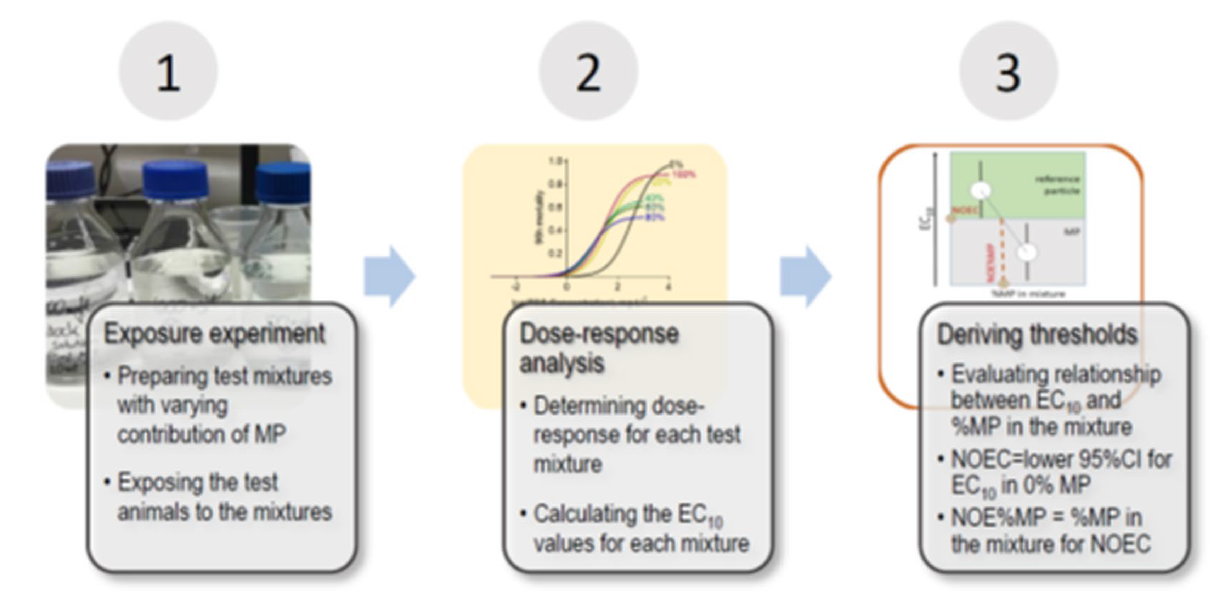
We propose a novel experimental design for testing hazard potential of microplastics (as well as any other suspended solids) on aquatic organisms.
Algal growth inhibition assay is great for testing chemical toxicity. But is it as good for solid waste materials, such as microplastic?
To develop a framework for quantifying hazardous properties of microplastics in biota
Complex behavior of the test particles and their interactions with biofilm and other particulates drives biological effects of microplastics as suspended solids
Microplastic effects on test organisms are mediated by biofilms. In a semi-sterile test system, these biofilms originate from the test organism's microbiota.
Here, we discuss evidence from controlled laboratory experiments and field studies on microbe-plastic interactions and their biogeochemical relevance.