
Video
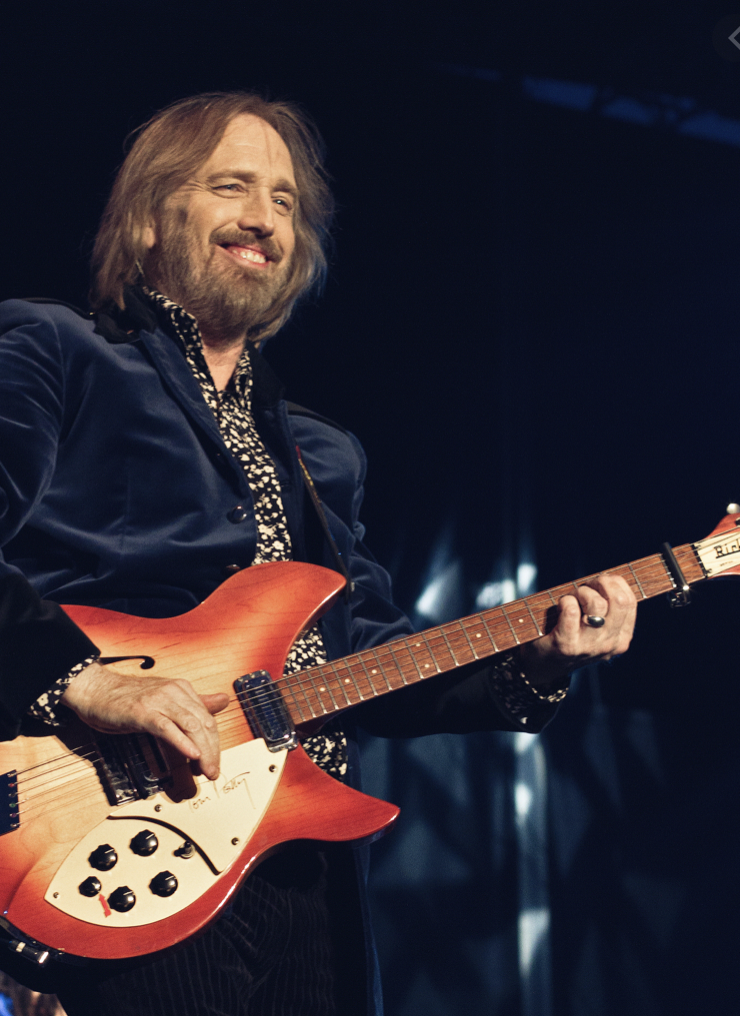
Tom Petty : my favourite rock'n'roll musician and poet
Some Petty songs that I like : 3 audio tracks from the Full Moon Fever album and 3 later video clips. If you want to change the order, click on Learning to fly.
Keith Hart
I have had a nomadic life, working in some 24 countries for between two months and two decades or more. Movement is therefore the common theme of that life. For long periods I relied on my library of books to anchor a sense that a stable personal identity underpinned the variety. I was and am a professional intellectual, so the link was fairly obvious. But music was always my passion, even if it made few appearances in my public profile. My store of analogue musical objects was more vulnerable than the books in all those upheavals. In any case, the technology also moved on and many of them became obsolete. I was more or less reconciled to having lost my library of music except in my memory. But the digital revolution of the last three decades changed all that, especially the World Wide Web that enabled the present exercise of storage, retrieval and reflection. At very little cost I can now assemble my favourite music of a lifetime. This is the result.
What is the main difference between animals and plants? Animals (including early humans and most people today) move to where the food is. Plants expect the food to come to them. For 10,000 years, we built societies on cultivating plants and domesticating some animals in fixed places. These agricultural societies are now adjusting painfully to movement enabled by machines. Stability and movement are often hard to reconcile. Global and local aspects of existence seem to be antagonistic. We have to learn to combine these extremes. Music is the main proof of our human ability to move fluently between universal and particular dimensions of our shared lives. Numbers, fiction (plays, novels and movies) and money also school us in scaling up the self and scaling down the world. We urgently need to bring together opposed aspects of life in this dangerous moment when societies built on agriculture adopted machines. Our human heritage of music is a good place to start.
There was much local pride in Manchester when I was growing up. Self-organized music-making was vibrant. There were church choirs, brass bands, fife and drum bands and operatic societies. Singing linked me to the music-making traditions of my class and region. ________________________________________________________________________________________________________ On Sunday evenings, I joined Dad and my two aunts, with Uncle Albert giving a strong lead at the piano. We would sing hymns, psalms, arias, spirituals, pop songs, nursery rhymes – anything and everything. Church was a main focus for organized singing. I had a good voice and once sang ‘The holly and the ivy’ solo on BBC radio. But my exposure to music went beyond this. Dad couldn’t go to work without a dose of classical music from the BBC Third Programme. We would compete to identify the music first. _________________________________________________________________________________________________________ He also had a box full of 78s, collected in the 1930s. We had no gramophone; but Grandma did across the street – a standing cabinet wound manually. I played Dad’s records there. They featured singers like Beniamino Gigli, Paul Robeson and Deanna Durbin. I sang along with La donna è mobile, Nessun dorma, the chorus of the Hebrew slaves. But I was obsessed with Dvořák’s New World Symphony conducted by Arturo Toscanini. It never failed to sweep me away, embedding America deeply in my imagination. _________________________________________________________________________________________________________ Rock ’n’ roll was invented just for me. At 14, I preferred black singers coming out of rhythm ’n’ blues to Elvis Presley and the white pop stars. At 16 I found Miles Davis’ Kind of Blue; it hooked me for life. At the millennium I was in a car going to a beach in Brazil. The century’s top hundred pop songs were on the radio. I was singing along when the driver said ‘He knows all the words!’ I did, at least for the 1950s to the 70s. One daughter kept me in touch with the 80s and the other with millennial pop. I feel blessed that my teens were when rock ‘n’ roll was born. We thought we owed nothing to older generations. That was our biggest mistake. __________________________________________________________________________________________________________ I woke up one day in October 2017 and found that Tom Petty had died in Los Angeles from a cardiac arrest aged 66. Tom Petty, leader of the Heartbreakers, died of a broken heart. For months I had immersed myself in his music, lyrics, live performances, biographies and documentaries while trying to launch a book, Self in the World: Connecting Life's Extremes (Berghahn, Spring 2022). I thought I could approach writing my life story through his example. The New York Times said that his lyrics spoke for underdogs and The Guardian wrote: "Petty was a music fan as much as he was a musician, aware that the style that had made him successful was based at least in part on borrowing and paying homage, smartly synthesizing the sound of artists he loved into something entirely his own". Tom Petty never lost sight of where he came from, of where rock ‘n’ roll came from (the US South). _________________________________________________________________________________________________________ He fought the corporate private property system twice and won both times. I too hate private property in the mind’s products. I join the long human conversation about a better world that sustains us all. T. S. Eliot once wrote: "The great poet immerses himself in his tradition and then writes the poem that is necessary to move it along". Bob Dylan and, not far behind, Tom Petty are the great poets of my lifetime. I am not a notable poet, but I am a fan of poetry, especially of songs produced in that great social crucible that is America. The chorus of Tom Petty’s Learning to fly’ goes ‘I’m learning to fly but I ain’t got wings/Coming down is the hardest thing’. I understand this. Mine is not a huge success story. I have not sold 80,000 albums. But I do know about wanting to fly. _________________________________________________________________________________________________________ When my mother was dying, I sat in the hospital car park listening to Paul Simon’s Graceland with tears streaming down my face and shouted ‘I am a singer!’ All we have against death is song. _________________________________________________________________________________________________________ Soon after the millennium, I was on an American Airlines plane taking off from Paris to Chicago. I tuned to a TV news channel, but soon lost interest and read my book. Later I noticed that my foot was tapping. There was an ad break on the screen. This cheered me up: I was going to the land whose popular music is always going somewhere. Chicago is my favourite city for this reason. London hijacked Manchester’s industrial revolution for the dead end of colonial empire. Chicago took up markets on a grander scale. AA frequent flyers were called ‘roadrunners’. One compilation was ‘road music for roadrunners’. In my American decade, I absorbed ‘freedom’ as a synthesis of idea and practice rooted in forward movement, especially in rock ‘n’ roll. _________________________________________________________________________________________________________ I found in the chorus of Tom Petty's ‘Runnin’ down a dream’ the poetry that launched my book. "Yeah runnin' down a dream": We are driving down a road, our life journey, chasing an elusive dream. Writing the book might help me understand what I have been running after. "That never comes to me": We are not authors of our own destiny or even of our dreams. In one recurrent dream, I am in a wilderness: a ravine with rocks and trees above, a fast-flowing mountain stream below and a narrow path ahead. A brown bear blocks my way. I can smell its damp fur; it opens its mouth and I shield my face with my arm which is clamped in immensely strong teeth. But I am not afraid and the dream ends. The wilderness is nature and the bear my nature, my unconscious mind. It is more powerful than my conscious self, but that’s OK. _________________________________________________________________________________________________________ “Workin’ on a mystery, goin’ wherever it leads”: The mystery is death. Murder mysteries are my favourite fiction genre. I have one on the back burner. I spent two years in a West African slum. I thought I became a better fieldworker with time. But when I wrote it up, I only used my notes from the first year. These read like a detective story – I was asking big questions then, but later I drowned in the trivia of parish pump politics.

Goldsmiths, University of London
Some Petty songs that I like : 3 audio tracks from the Full Moon Fever album and 3 later video clips. If you want to change the order, click on Learning to fly.
A pdf version of all the YouTube music playlists and their individual contents. Also explained is how it works, enjoy!
Thirty mega-hits in roughly chronological order united by the power of their forward movement.
Probably my favourite playlist. Black music was the only beautiful thing to come out of 19th century America (Du Bois) and the last one saw it going mainstream.
Thirty great pop hits with a more reflective tempo.
A puny self lost in a vast unknowable universe. We need to scale the world down and scale up the self so that they can meet somewhere meaningfully.


