Publication
Nature - 'A mobile robotic chemist'
Nature paper on an mobile robot autonomously operating analytical instruments in a wet chemistry laboratory.
University of Liverpool Faculty of Science and Engineering

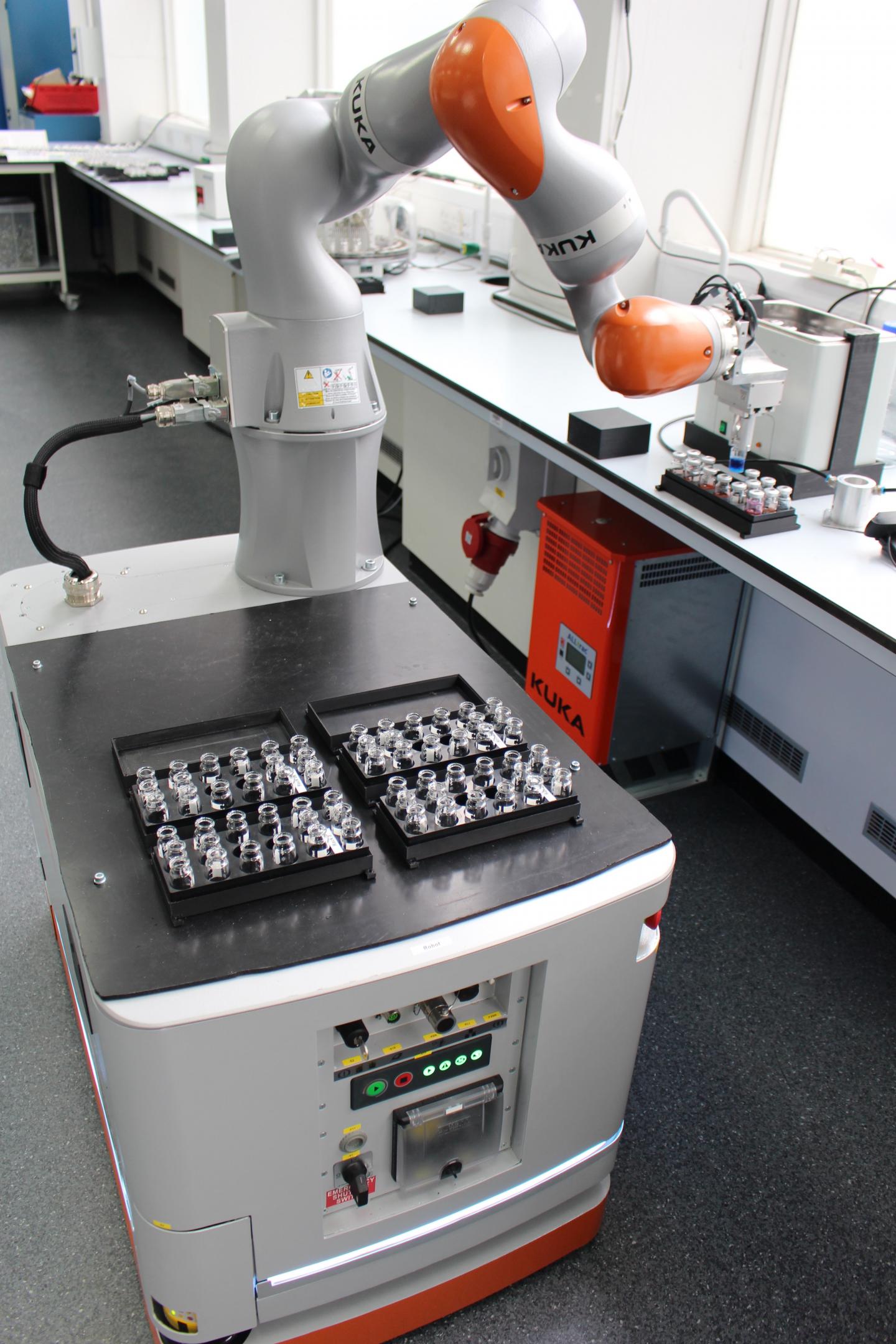
Researchers at the University of Liverpool have built and developed an intelligent mobile robot chemist capable of carrying out its own experiments and working around the clock with minimal human intervention. Developed by Professor Andy Cooper and PhD student Benjamin Burger, the 1.75-metre-tall robot chemist is equipped with a high level of artificial intelligence which allows it to learn as it works and make its own decisions about which chemistry experiments to perform next.
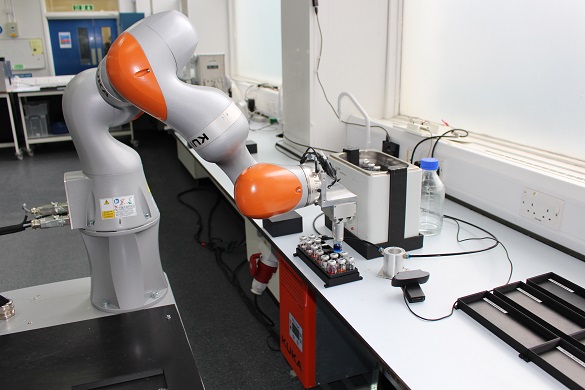
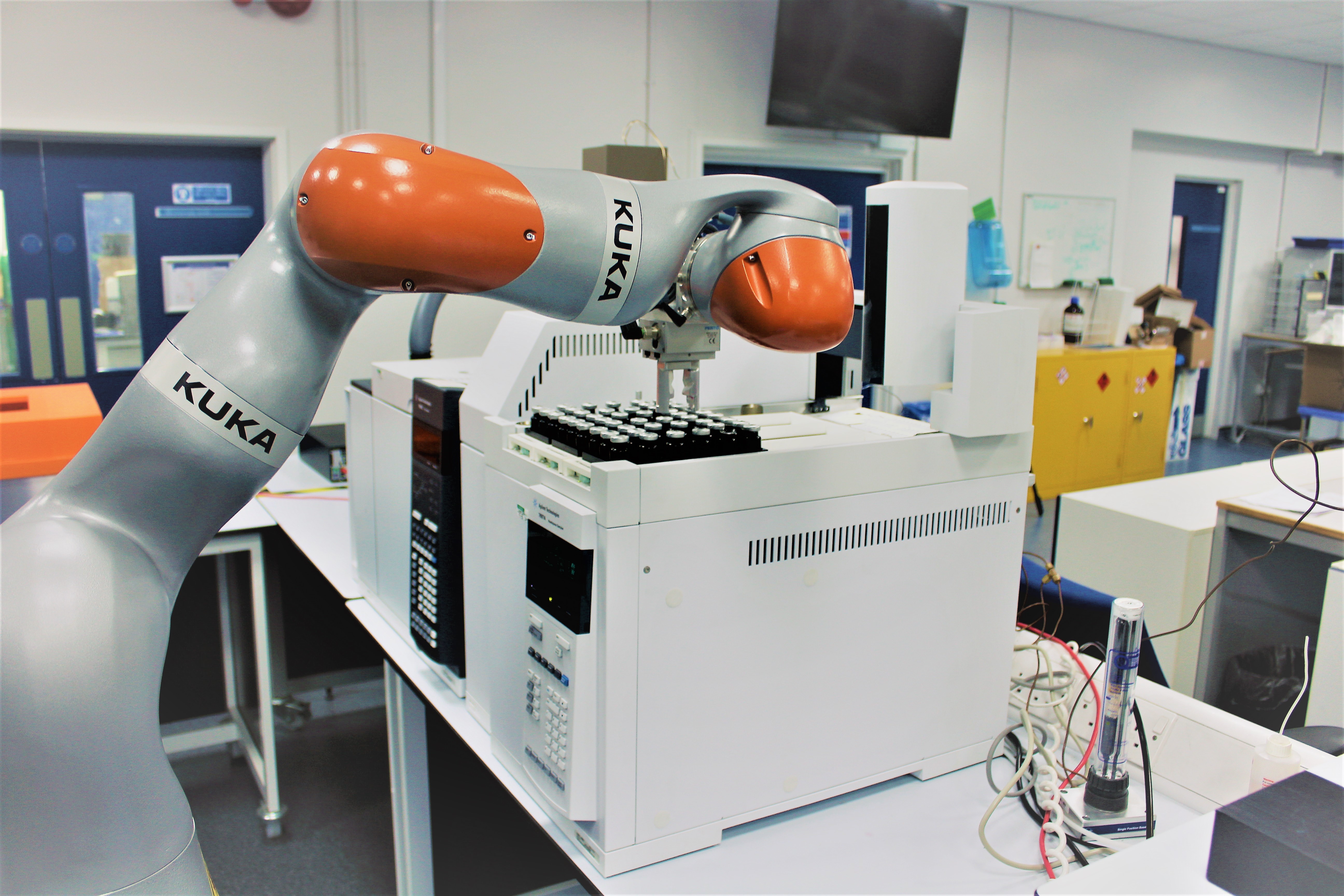
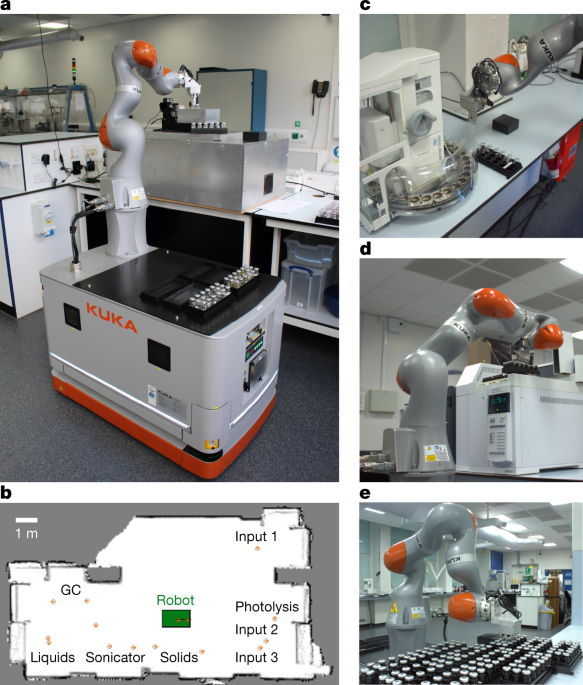
The robot chemist can work with equipment designed for human operation because of its human-like dimensions and physical reach. It uses a combination of laser scanning coupled with touch feedback for positioning, rather than a vision system. The robot independently carries out all tasks in the experiment such as weighing out solids, dispensing liquids, removing air from the vessel, running the catalytic reaction, and quantifying the reaction products.
Reported in the journal Nature, this new technology could tackle problems of a scale and complexity that are currently beyond our grasp. For example, autonomous robots could find materials for clean energy production or new drug formulations by searching vast, unexplored chemical spaces.
The robot’s brain uses a search algorithm to navigate a 10-dimensional space of more than 98 million candidate experiments, deciding the best experiment to do next based on the outcomes of the previous ones. By doing this, it autonomously discovered a catalyst that is six times more active, with no additional guidance from the research team.
The mobile robot is able to carry out complex experiments in a regular R&D lab, either alongside human researchers or alone – making it the perfect technology for carrying out R&D at a time when social distancing and working from home have been forced upon university and company laboratories.
The team aimed to automate the researcher, rather than the instruments. This creates a level of flexibility that will change both the way they work and the problems they can tackle. This is not just another machine in the lab: it’s a new superpowered team member, and it frees up time for the human researchers to think creatively.
Nature paper on an mobile robot autonomously operating analytical instruments in a wet chemistry laboratory.
A short video published by Nature showing how the Liverpool research team have developed a fully autonomous mobile robot to assist them in their research.
For the world to reach net zero, we need to be discovering materials that enable new technologies which don't use petrochemicals or fossil fuels.