
Publication
Melissa officinalis Protects against Doxorubicin-Induced Cardiotoxicity in Rats and Potentiates Its Anticancer Activity on MCF-7 Cells
PLOS ONE | DOI:10.1371/journal.pone.0167049
Alaaeldin Hamza

Cardiotoxicity is a limiting factor of doxorubicin (DOX)-based anticancer therapy. Due to its beneficial effects, we investigated whether standardized extract of Melissa officinalis (MO) can attenuate doxorubicin-induced cardiotoxicity and can potentiate the efficacy of DOX against human breast cancer cells. MO was administered orally to male albino rats once daily for 10 consecutive days at doses of 250, 500 and 750 mg/kg b.wt. DOX (15 mg/kg b.wt. i.p.) was administered on the 8th day. MO protected against DOX-induced leakage of cardiac enzymes and histopathological changes.
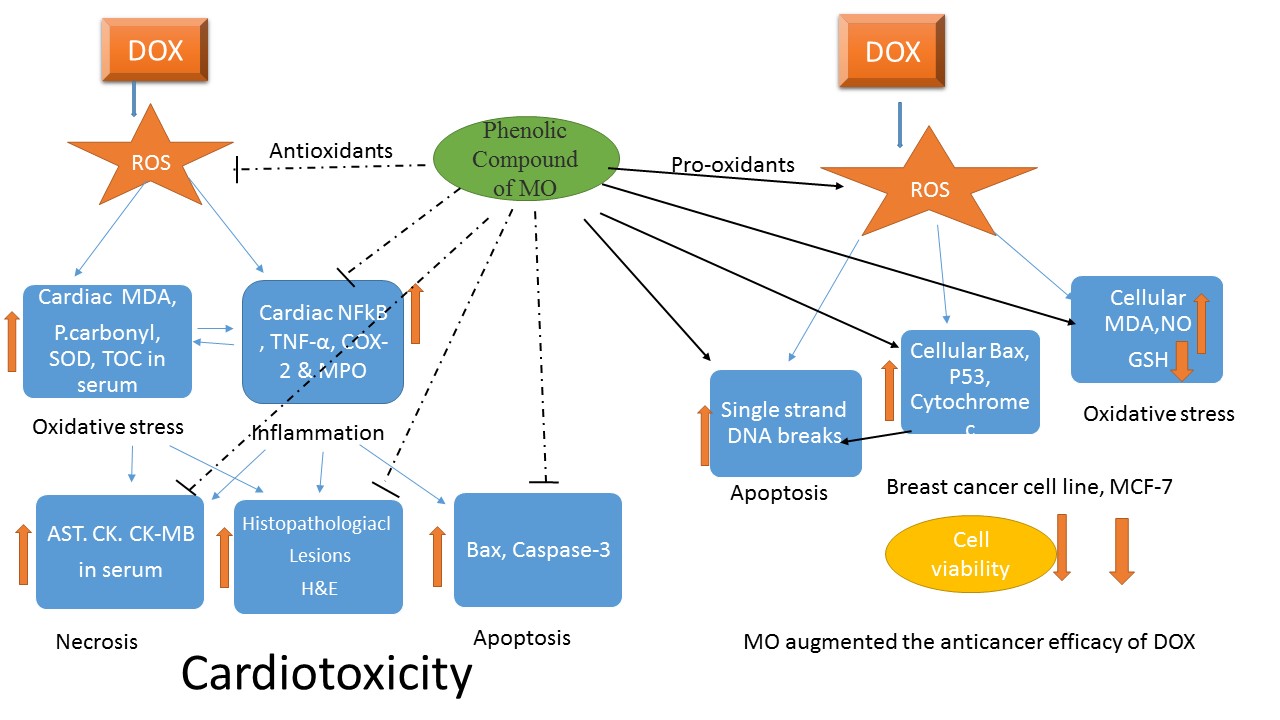
MO ameliorated DOX-induced oxidative stress as evidenced by decreasing lipid peroxidation, protein oxidation and total oxidant capacity depletion and by increasing antioxidant capacity. Additionally, MO pretreatment inhibited inflammatory responses to DOX by decreasing the expressions of nuclear factor kappa-B, tumor necrosis factor-alpha and cyclooxygenase-2 and the activity of myeloperoxidase. MO ameliorated DOX-induced apoptotic tissue damage in heart of rats. In vitro study showed that MO augmented the anticancer efficacy of DOX in human breast cancer cells (MCF-7) and potentiated oxidative damage and apoptosis. Thus, combination of DOX and MO may prove future cancer treatment protocols safer and more efficient.
This study provides new insights into the development of strategies to augment anticancer activity of DOX and further to alleviate its cardiotoxicity. I believe that the beneficial effect of the MO extract is likely due to the synergistic interactions of phenolic compounds and other triterpene acids of MO which acts as antioxidants in normal cells and as pro-oxidants in cancer cells.

National Organization for Drug Control and Research
PLOS ONE | DOI:10.1371/journal.pone.0167049