Project

Marine snow as a vector in microplastic transport and degradation

Elena Gorokhova

What is it about?

The team: Andreas Barth (Department of Biochemistry and Biophysics) Elena Gorokhova, Sophia Reichelt, Hoishing Lo, Rehab El-Shehawy (Department of Environmental Science)

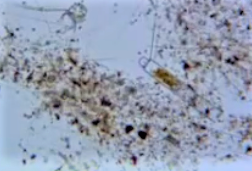
In the environment, plastic litter is exposed to weathering forces, both abiotic and biotic, affecting polymer degradation, transfer in the food web, and, ultimately, its environmental fate. In the water column, the downward flux of plastic debris is primarily driven by the aggregation with microorganisms and other particulates, the so-called marine snow. To predict MP occurrence, we study ecological forces, such as phytoplankton blooms and biofilm activity, behind aggregation and degradation of plastic debris.

Why is it important?

The project outcome of this FORMAS-funded project would contribute to the science-based risk assessment of MP and understanding how consequences of the global trends in plankton dynamics impinging on a differential capacity of the Baltic (and similar) ecosystems to process plastic litter.

Perspectives

Plastic litter and, especially, microplastic are recognized as emerging environmental contaminants, fueled by keen interest both inside and outside academia. However, despite great research efforts, plastic distribution and fate in the aquatic environment are largely unpredictable. The major reason for this unpredictability is poor integration (or rather lack thereof ) of plastic debris with other particular matter in the water column and sediment. We know little about interactions between plastic particles and other living and non-living particulates, despite the common agreement that mechanisms behind these interactions govern plastic sedimentation, biodegradation and, ultimately, the impact of plastic in the environment.

Resources4 total

Who is involved?