Press briefing
Addressing the Health Disparity between Indigenous and Non-indigenous Australians through Social Inclusion and Empowerment
21st September 2021, Queensland – Aboriginal and Torres Strait Islander peoples (henceforth referred to respectfully as Indigenous Australians with full acknowledgement of their cultural and historical diversity) are the traditional custodians of the lands and waters of Australia. In recent decades, there has been an increase in the visibility of their inequality and oppression. Correspondingly, there has been an increase in research focused on improving their access to quality health and education.
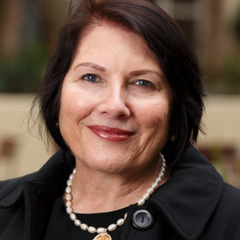
But much of this research does not translate into actual policy, nor does it include the values and principles that Indigenous Australians hold. Addressing this inequality and empowering Indigenous Australians forms the core of Professor Roxanne Bainbridge’s research. A professor at the Central University of Queensland, Australia, Professor Bainbridge has used her expertise in research impact assessment and evaluation, improvement sciences, systematic literature review, and auto/ethnographic approaches to develop government and community health and educational resources for Indigenous Australians.
Indigenous Australians find it difficult to access primary healthcare services for multiple reasons, including but not limited to racism, unemployment, and low education levels. A Gunggari/Kunja woman herself, Professor Bainbridge understands the importance of centering Indigenous Australians and their values in any research and policy on their healthcare. Her culturally constructive critique provides new understandings of health, wellness, and illness in Indigenous Australians to researchers and policymakers. Some of the main focuses of her research are the social determinants of Indigenous health and wellbeing. Another key area of her work is strengthening Australia’s primary healthcare systems to provide equitable healthcare.
Professor Bainbridge has brought a vast array of knowledge to diverse projects in Indigenous health, including mental health and suicide, adolescent psychosocial wellbeing, child and maternal health, palliative care, and education. At present, she is the lead investigator in a 4-year national assessment project of the Commonwealth Government’s investment in Indigenous primary healthcare. She is also leading an Australian research council project on engaging adolescents to improve mental healthcare in Indigenous primary healthcare services. Let’s hope that Professor Bainbridge’s research is one of many to come that will push for policies and changes on the ground aimed at tearing down the walls between Indigenous and non-Indigenous Australian citizens.