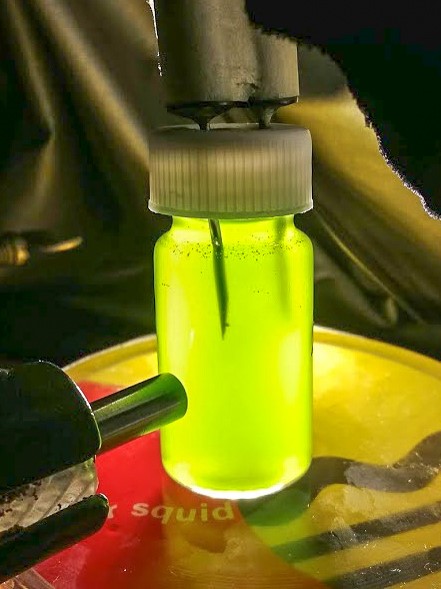
In the quest for a sustainable, low-carbon future, employing green algae to produce solar hydrogen (H₂) shows great promise. This project aims to understand the complex processes involved in H₂ generation by algae while addressing critical challenges such as the sensitivity of H₂ production to oxygen co-evolved during photosynthesis and competition with CO₂ fixation. By overcoming these challenges, the project aims to enhance both the efficiency and long-term sustainability of algae-based hydrogen production.
Redirecting Electron Flow to Boost H₂ Yields
A major objective of the project is to redirect photosynthetic electron flow toward H₂ production, significantly increasing photoproduction yields. This is achieved through protocols involving strong light pulses combined with periods of darkness or low background light. These approaches maximize the availability of photosynthetic electrons to algal hydrogenase, the enzyme responsible for H₂ gas generation.
Understanding the Role of Photosystem II (PSII) in H₂ Photoproduction
The project explores the interplay between Photosystem II (PSII) activity and CO₂ fixation under microoxic (low-oxygen) conditions. Gaining insights into these processes is key to optimizing H₂ production and balancing the competing photosynthetic pathways.
Effective H₂ and O₂ Management for Sustainable H₂ Production
Sustained H₂ photoproduction over extended periods requires effective management of H₂ and O₂ levels. Strategies are being developed to prevent O₂ accumulation, which inhibits H₂ evolution, while simultaneously controlling H₂ partial pressure to minimize H₂ consumption and maximize H₂ production efficiency.
A Breakthrough: Solid-State Photosynthetic Cell Factory for Enhanced H₂ Production
To dramatically extend the duration of H₂ production and enhance H₂ production yields, a solid-state photosynthetic cell factory is being developed. This thin-layer catalyst, consisting of algal cells and advanced (nano)materials, is assembled within a leaf-inspired matrix architecture specifically engineered for efficient light utilization.
Revolutionizing Energy Systems through Green Algae
These advancements in algae-driven H₂ production have the potential to revolutionize energy systems, offering a clean, renewable alternative to fossil fuels. By efficiently harnessing the power of green algae, this approach reduces carbon emissions and mitigates the environmental impacts of traditional energy sources, driving us closer to a sustainable future.