Publication
A novel FTIR analysis method for rapid high-confidence discrimination of esophageal cancer
Journal article in Infrared Physics & Technology.
University of Liverpool EPSRC Impact Acceleration Account
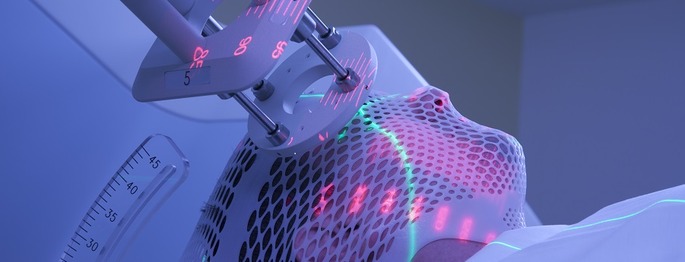
Researchers at the University of Liverpool led by Professor Peter Weightman have developed a new instrument for the early diagnosis of cancer with support from the EPSRC and Cancer Research UK. The instrument provides subcellular infrared (IR) images of cancerous cells and tissue and has the potential to yield a novel diagnostic technique to determine the various stages of cervical, oesophageal and oral cancers. The development of such an instrument for early diagnosis will allow surgeons to test tissue during a surgical operation to ensure the successful removal of all cancerous cells, preventing the reoccurrence and/or spread of cancer.
Working with both the University of Liverpool Management School and Bioclough Consultants Ltd, a key factor in developing a marketable instrument was identified: the cost of processing a component necessary for its operation was too expensive for commercial use. In light of this advice through the IAA we were able to address two problems concerned with the semiconductor fibres that are a key component of the instrument, which focused on the development of a more efficient and less wasteful method of coating the fibres with gold. Following this, a method was developed to replace the gold coating with a cheaper aluminium coating.
Advances in the preparation of the semiconducting fibres have significantly improved the marketability of the instrument, and the cheaper and more reliable method of coating the semiconductor fibres with aluminium developed with support from the EPSRC IAA scheme helped to secure follow on funding of £430K from Cancer Research UK for a programme on "Early detection of oral cancer using infrared imaging.”
The research programme using the high-resolution infrared microscope complements research with related equipment which lead to the development of a machine learning algorithm that is the subject of a patent application and was the basis of a recent publication, which made it possible to discriminate between Cancer-Associated Myofibroblast and Adjacent Tissue Myofibroblast for oesophagal cancer.
Support from the EPRC IAA funding has played a major contribution towards the development of a marketable instrument, and has provided invaluable insight into the necessary steps that must be taken to develop a commercially desirable instrument.
Thirty per cent of us are expected to develop cancer within our lifetimes. In 2018 there were 17 million new cases of cancer worldwide, and this is expected to increase to 27.5 million each year by 2040. The early detection of cancer is crucial to increase the chances of successful treatment, and there is a need to develop cheaper and more accurate diagnostics for cancer.
This instrument has the potential to be a breakthrough in the early diagnosis of certain cancers including oral and oesophageal cancer. An important factor in its medical and commercial success is making it inexpensive to manufacture which in turn allows an affordable selling price. This work was an important step towards that goal.
Journal article in Infrared Physics & Technology.