Press briefing
My plan to make a new clean generator of no natural resources
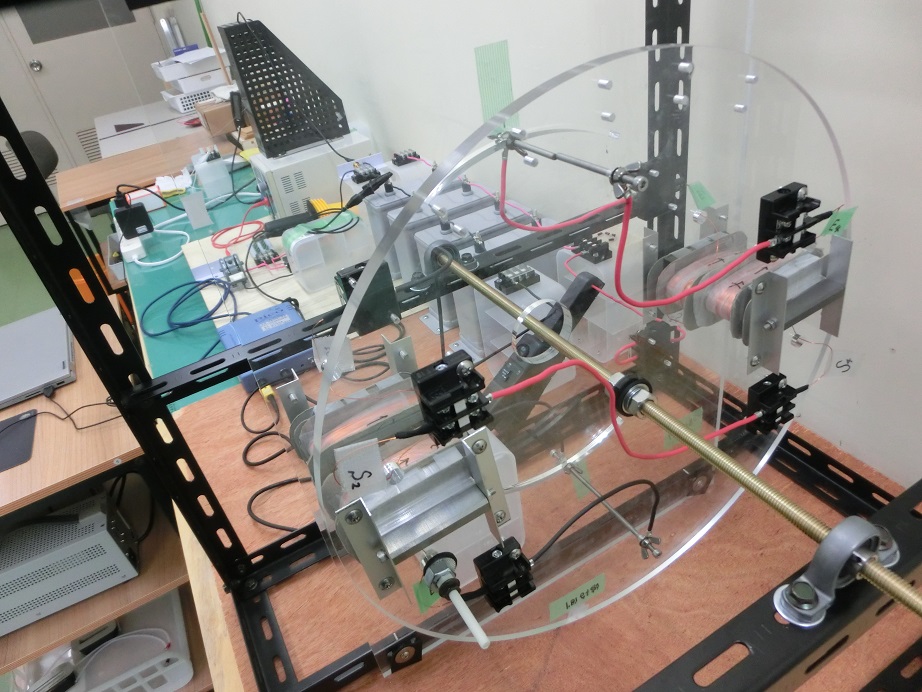
What plan Making a prototype of generator, no need for natural energy source, clean and no waste gas, static, no moving part, based on the theory of electromagnetic resonation of my finding and no example in the world. The first prototype is to confirm and test the operation of around 10W output power. After the basic experiment of the prototype was done. Then I will make the output power increasing to 100W by a few steps. Perhaps I could make a few kilowatt generator for a house or EV. The EV with my generator does not need charging of the battery. A kilowatt output power might be limit of my work. After then, I need much help by the electrical power engineers to make large output generator in a power plant.
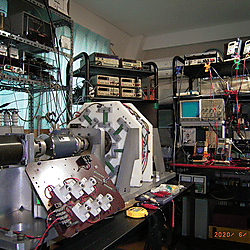
How, who and where To make the first prototype, my laboratory in Japan is too small. It is in a room of flats, the size is only 20m^2. I would like to move my laboratory to larger room. I would like to keep my research in UK or USA. Because no reliable investor is found in Japan. Unfortunately, investor and scientist in Japan can’t understand well my research. As some Japanese investors tried to do money game by my research. I rejected them all. It looks very strange for the common scientists. That is why I have some hope on scientists in UK and USA. Now I am researching only by myself. I have been researching by myself for more than 40 years. However, I have a few friends to help my research for volunteer. They help me to design and to make the experimental device, or to give me advice of applying patents. But they don’t know precisely about my research. I would like to keep my research in laboratory of government, or some University in UK or USA, or independent laboratory of reliable investor. I would like investors who do not target my research to play money games. In addition, my researching needs strong guard to protect secret technologies.
What I discovered I had started my new energy research at one year after I graduated University in 1971. I read a book written by Prof. Shin-ichi Seike. He said that infinite clean energy is existing in space and it is possible to induce electricity directly from space. I made a static generator which Prof. Seike suggested on his book. After I presented my report on generator experiment on the journal of Prof. Seike. One reliable person sent me an information of EMA motor invented by Edwin Gray in LA, 1973. The operation of EMA motor seems to be utilizing the energy of which Prof. Seike wrote on his book. So I shifted my research to EMA motor. I made several prototype of the motor like EMA motor by various methods. I found a new electro motive force in the 3rd motor. The new electro motive force (EMF) I found could become a new source of clean energy. I made several experiments of self-sustaining generator during 2010~2019. However, the operation of the generators are not stable. On the other hand, I have been trying to test the resonating transformer since 2017. Because I had keeping a thought in my mind that electromagnetic resonation shall make excess energy. In March 2020, I have succeeded to make inducing excess energy by the resonating transformer I invented. Through the various test of the transformer, I reached an idea that resonating transformer is the closest method to make a practical self-sustaining generator. It is really the generator of no natural energy which I have been researching for about 50 years. The reason of such long time researching, my inspiration I got by the book of Prof. Seike was so strong.