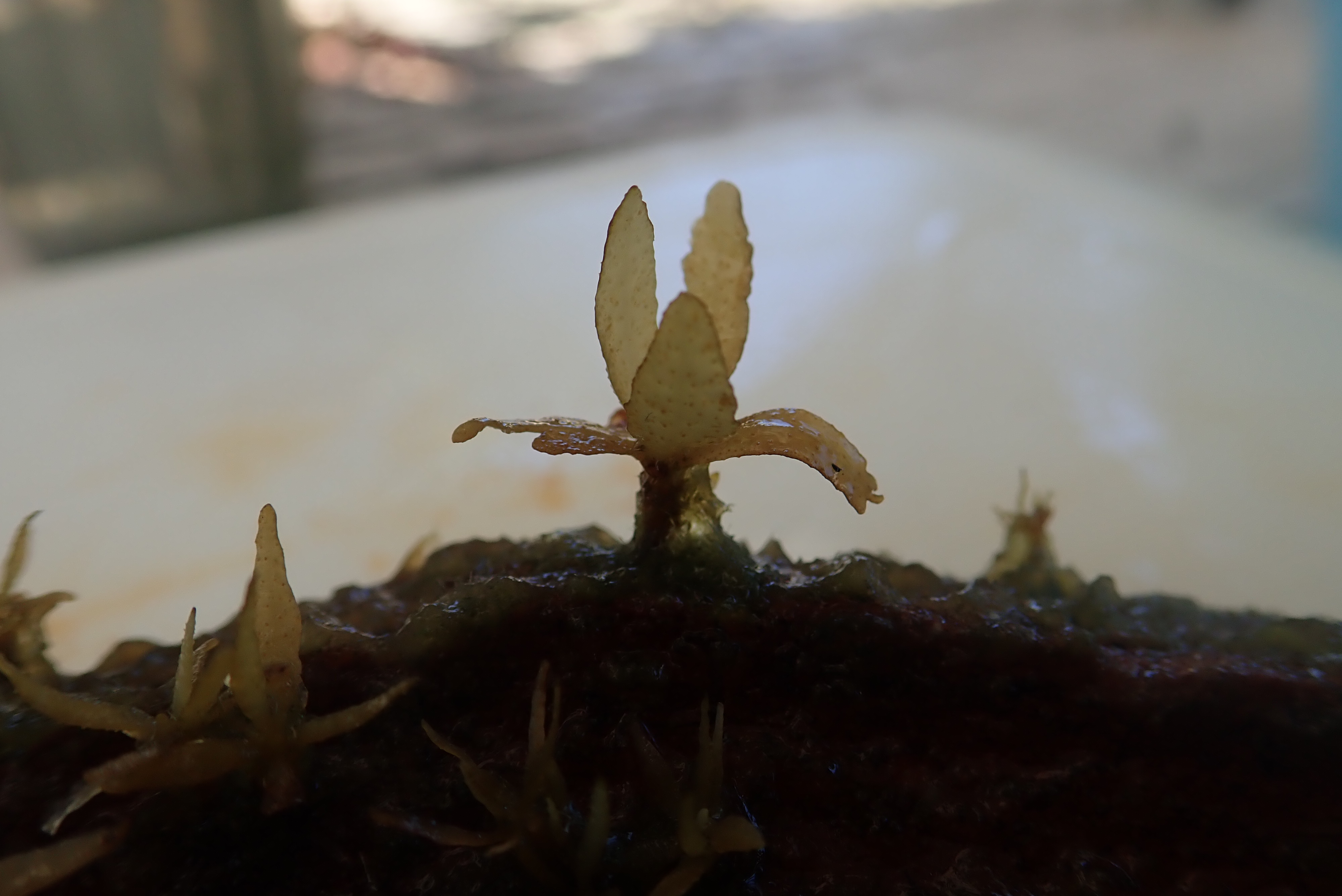
Sargassum is cultured using hatchery techniques to produce large amount of seedlings that can be transplanted into the open sea for mass cultivation until harvesting.
Sargassum is a brown algal genus that forms dense beds on rocky habitats that are homes to fish and invertebrates, many of which are important fishery resources. The seaweed is harvested for its high value extracts that have potential applications in industry - pharmaceutical, nutraceutical, agricultural, just to name a few. Alginate and fucoidan, which are a type of polysaccharides, have several uses in food and beverages and have potential use in bioplastics as well as dental applications. Mass propagation of this seaweed in the open sea, from hatchery-bred seedlings, is gaining ground especially in the tropical region to ease the pressure on harvesting from the wild population.