Educator briefing
A ready-made menopause update for primary care trainers and CPD leads
Menopause is one of the clearest examples of clinical training dating faster than the people delivering it. Most UK GPs report that their menopause education was inadequate, only a minority find the guidance clear enough for everyday practice, and the evidence has moved considerably in a short time. For anyone responsible for training primary care clinicians, that creates a recurring problem: teaching materials and personal knowledge both need refreshing more often than the formal curriculum allows, and the gap belongs to the pace of change rather than to any individual clinician.
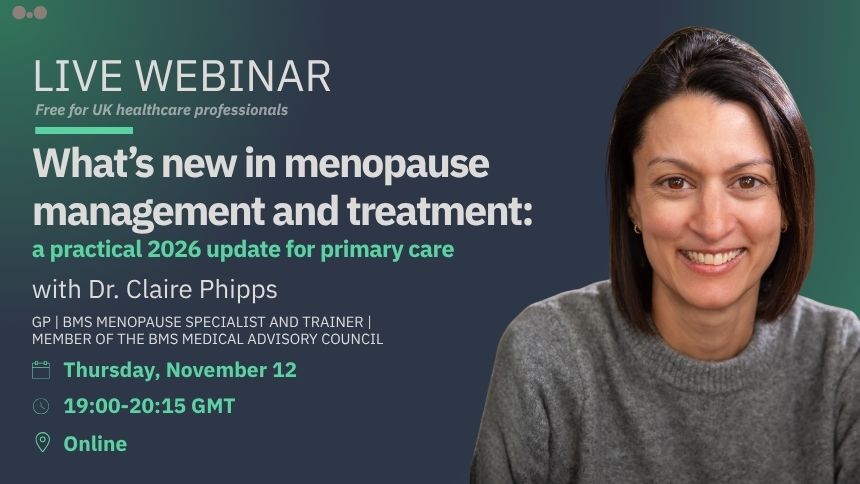
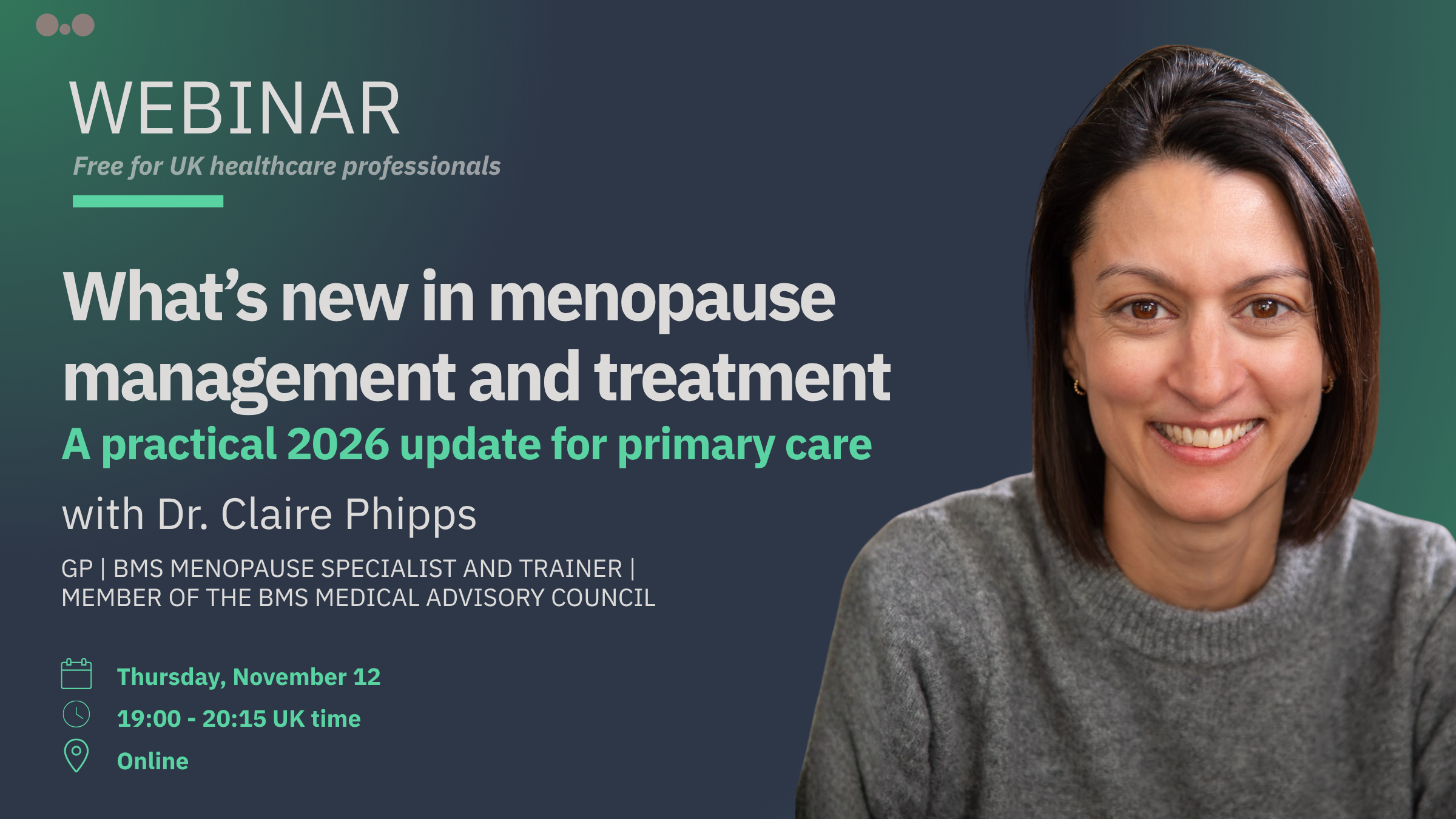
This webinar is a current, structured update designed to be used that way. It sets out what has changed and what it means in a standard appointment, from recognising the fuller symptom picture to a practical approach to HRT initiation, review and unscheduled bleeding, the evidence on non-hormonal options, and the complex consultation after cancer, including genitourinary symptoms and vaginal oestrogen safety. It is case-based and clinically led by GP and British Menopause Society menopause specialist Dr Claire Phipps, which makes it straightforward to use as a teaching session, as protected learning time for a practice team, or as a CPD resource for trainees and appraisees. The free session runs online on Thursday 12 November 2026, with a CPD certificate for attendees, and can be recommended to a whole team from a single link.
Details and registration are at medicinecentral.co.uk/webinars/140001