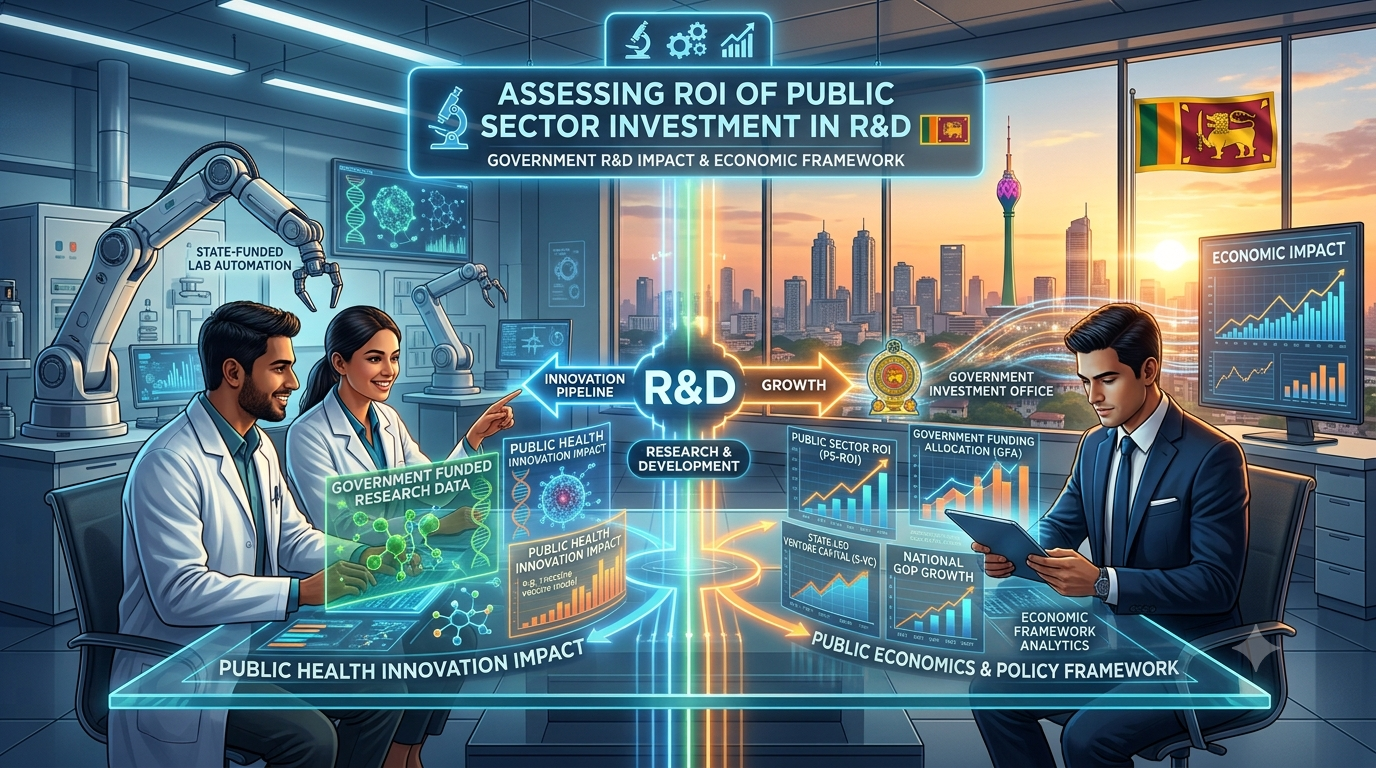
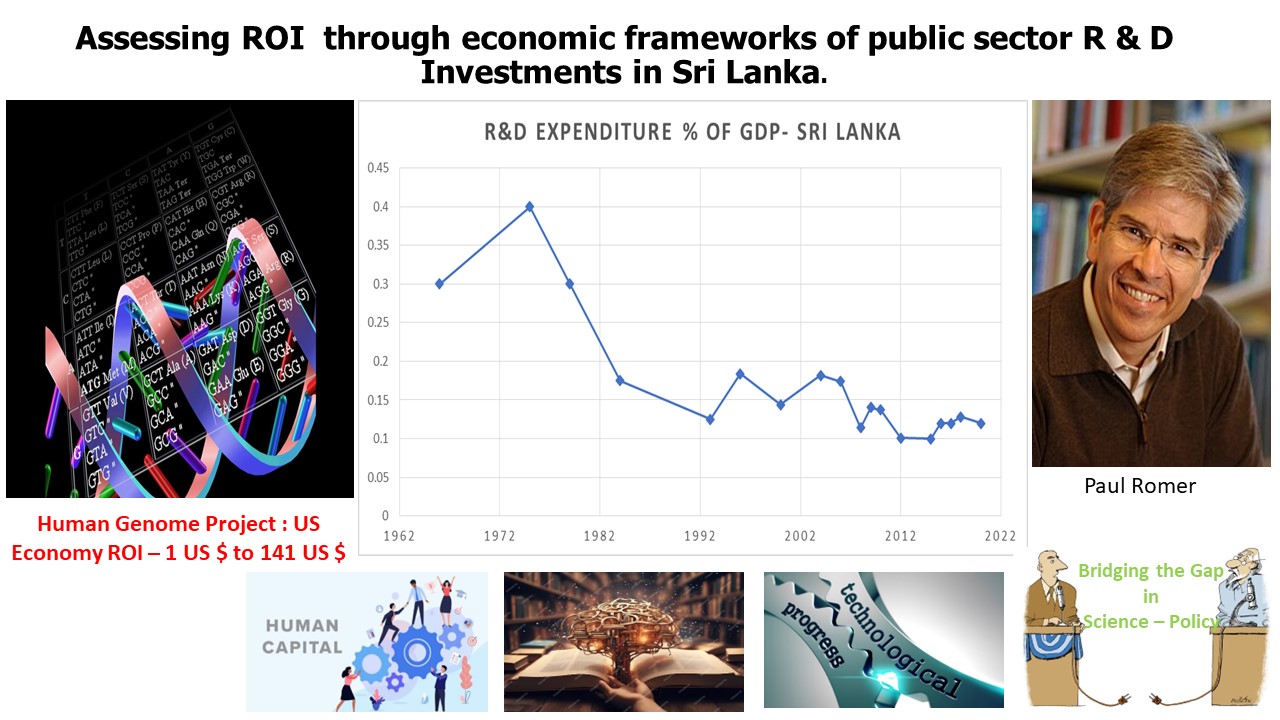
There is a strong correlation between a country's development and its investment in research and development (R & D). Science, technology, and innovation (STI) investments are frequently considered a source of national prestige for countries. As part of a policy for science, a significant portion of the government's spending goes to public-sector undertakings such as universities and S&T institutions that ultimately generate and return knowledge. From the generated knowledge to the Monterey return on the investments, innovation plays a key role in ultimately linking them. To date, the endogenous growth models explain the component innovation in relation to economic growth with robustness. The success story of assessing the US Genome Project ROI by the Battel Institute estimate of 141 dollars for every dollar investment is one of them. However, the latest developments in economics suggest that the key factor in the endogenous model, the production function knowledge component, could be supplemented by three subcomponents: knowledge incubation, acceleration, and spillover, to improve the parsimoniousness of the model. This study attempted to examine the R&D performance of public sector R&D investments at various levels by considering the latest developments in economic frameworks and not only endogenous models. Finally, it is better to understand the impact measurement that has been brought about by the investments through indirect, induced, and various multiplier effects and a robust economic model fit, ideally SEM and PLS approaches. Finally, the research will help us understand how our internal investments have contributed to the country's economy in terms of per-dollar investment versus ROI, which would be a critical player at the interface of knowledge brokering ( Science Advice) for future endeavors to ensure informed decision-making.