
What is it about?
Incremental dynamic analysis is a seismic analysis of structures based on the structural performance which states the behavior of the structures in a range of different intensities of earthquake. Due to the dynamic and non-linear nature of the earthquake, certainly the results of this method in comparison to the other types of analyses are closer to the reality of structural behavior. However, this method is a time consuming method and like other kind of time history methods, is too dependent on the records. Moreover, selection of intensity measures and engineering demand parameters are important issues that should be discussed. In this paper, a review on the history and concepts and how to perform incremental dynamic analysis (IDA) are discussed with a single record and multiple records
Why is it important?
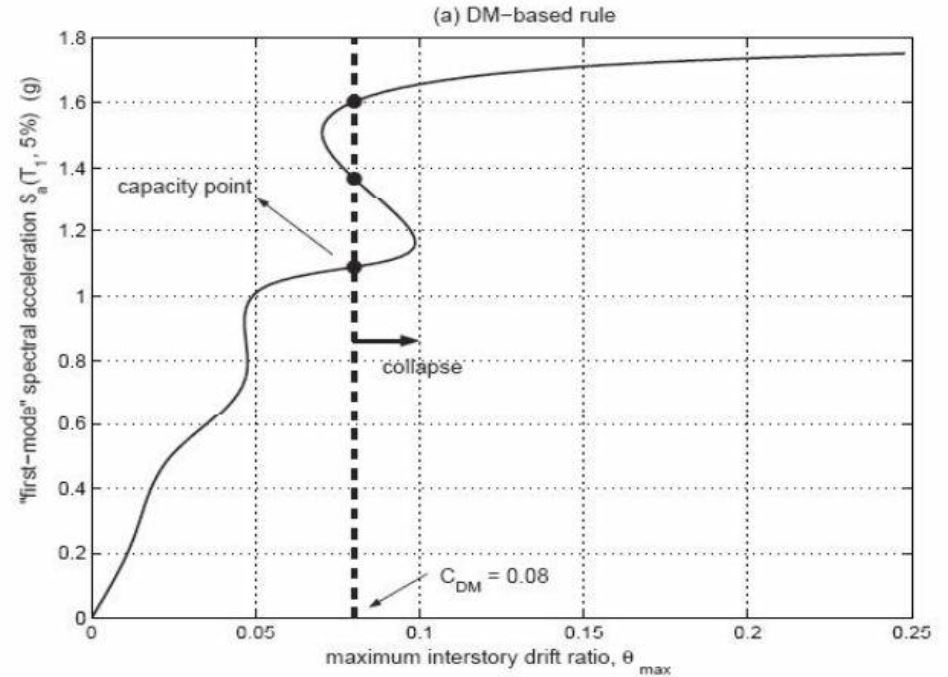
The increasing growth of computer processing power may enhance the accuracy of analysis results by using more complex methods. As a result, analyses are shifted from linear static to linear dynamic, nonlinear static and nonlinear dynamic. For the latter, nonlinear dynamic analysis, is usually designed to control structures, structural analysis with one or more records to obtain one or more single point. On the other hand, in the methods like the Push-over method (ATC, 1996) (SPO) or the capacity spectrum method (ATC. 1996), With scaling the representative of static load , a continuous picture of the behavior of structures in all domains of the elastic mode to the yielding mode and eventually collapse of the structure, are given to us. As we pass through a single static analysis we reach to the Pushover analysis, similarly by the development of time-history analysis, we only reach a few history-time analysis by which the seismic loads are scaled. Firstly, the concept of this method is expressed by Bertero(1977) and is used by several researchers later. This method has accepted by the guidlines of Federal Emergency ManagementAgency (FEMA) as The Incremental Dynamic Analysis (IDA) and can be used as a method in order to determine the potential collapse capacity of the entire structure. IDA is already a widely used and versatile method which only some of its objectives are: 1. Full understanding of the response or demand of the structure in a vast range of different levels of ground motion records. 2. Better understanding of the structural effects at different levels of the ground motion with less or more power. 3. Better understanding of changes of the nature of structure response with increase of the intensity of ground motion (e.g.: changes in maximum displacements in height, beginning of reducing the hardness, strength and their models). 4. Evaluation of the dynamic capacity of the entire structural system. 5. Finally, surveying IDA curves with multiple records and how to remain constant
Perspectives
Incremental dynamic analysis is a seismic analysis of structures based on performance which states the behavior of the structures in a range of different intensities of earthquakes. Due to the dynamic and non-linear nature of the earthquake, certainly the results of this method in comparison to the other types of analyses are closer to the reality of structural behavior and earthquakes. In this paper, a review on the history and concepts and techniques of performing incremental dynamic analysis (IDA) are discussed with a record and multiple records. As it has been specified, The IDA curve with one record cannot fully express the structural behavior for future events. Since IDA would be greatly dependent on the selected records. Then the Studying of multiple records - series of IDA studies with a record for a structural model under different accelerograms is necessary. Such a study will produce a series of IDA curves which can be plotted on a sheet by choosing the same IM and EDP.IDA curves, a set of IDA curves for structural models under different accelerograms that all of them are parameterized for the same IMs and EDPs.

Semnan University of Medical Sciences and Health Services
