Video
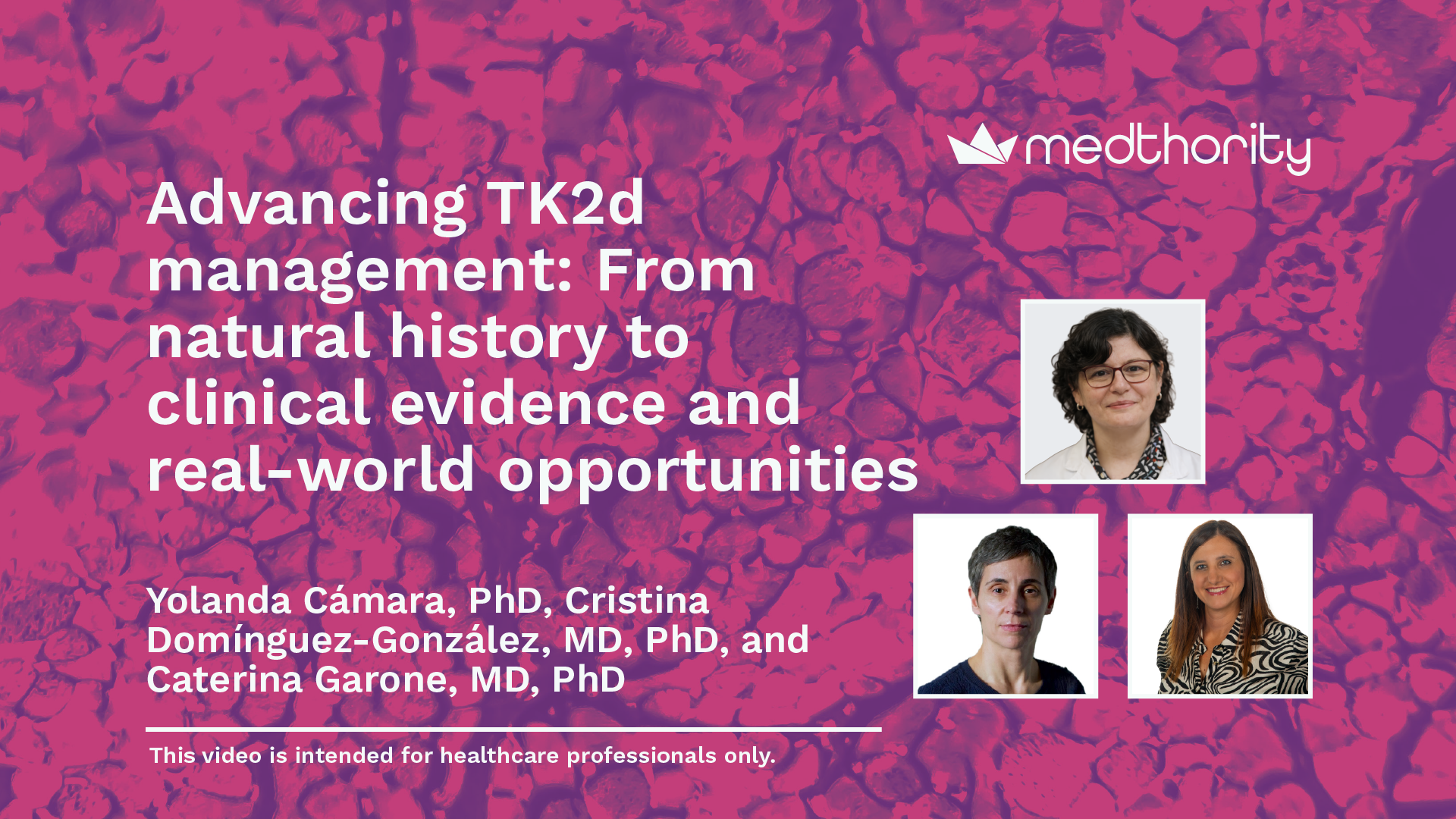
ICNMD 2026 accredited symposium: Advancing TK2d management
Watch Yolanda Cámara, Cristina Domínguez-González, and Caterina Garone discuss TK2d management and earn 1 CME credit
Medthority

A symposium at this year’s International Congress on Neuromuscular Diseases (ICNMD 2026) brought together Yolanda Cámara, MD, Cristina Domínguez-González, MD, PhD, and Caterina Garone, MD, PhD, to discuss key developments in thymidine kinase 2 deficiency (TK2d).
The panel reviewed the natural history of TK2d, a rare inherited mitochondrial disorder caused by changes in the TK2 gene, and emerging evidence demonstrating the impact of nucleoside therapy on survival, motor function, and respiratory outcomes.
Thymidine kinase 2 has a key role in maintaining mitochondrial DNA, and the panel explained how impaired nucleotide metabolism leads to mitochondrial DNA depletion and progressive muscle dysfunction. This provides the rationale for oral nucleoside therapy as a targeted approach to supporting mitochondrial DNA maintenance and mitochondrial function.
Real-world cases were used by the panel to illustrate the heterogeneity of TK2d and the impact of timely diagnosis and treatment. From severe infantile-onset disease to later-onset presentations in adolescents and adults, red flags such as high creatine kinase (CK) levels, respiratory muscle involvement, ptosis, facial weakness, dysphagia, and elevated mitochondrial biomarkers can support early diagnosis.
Finally, the panel discussed emerging initiatives helping to identify undiagnosed patients, validate variants of uncertain significance, and generate long-term real-world evidence to better understand prognosis and treatment response across diverse patient populations.
TK2d remains challenging to diagnose because it can resemble other neuromuscular disorders, including spinal muscular atrophy, muscular dystrophies, facioscapulohumeral muscular dystrophy, oculopharyngeal muscular dystrophy, and seronegative myasthenia. This symposium is timely because the availability of approved treatment has increased the importance of identifying patients earlier and generating real-world evidence.
The expert panel emphasized that diagnostic delay can lead to missed opportunities for intervention, whereas earlier treatment may be associated with greater functional recovery or long-term stabilization. They encouraged healthcare professionals to include TK2 in neuromuscular gene panels, investigate unexplained hyperCKemia, recognize early respiratory involvement, and use biomarkers such as GDF15 to support diagnosis and monitoring.
Key takeaways:
Healthcare professionals can earn 1 CME credit by watching the full symposium recording on Medthority (see links below).
Watch Yolanda Cámara, Cristina Domínguez-González, and Caterina Garone discuss TK2d management and earn 1 CME credit
Access the latest guidance on TK2d diagnosis and management