

Publication
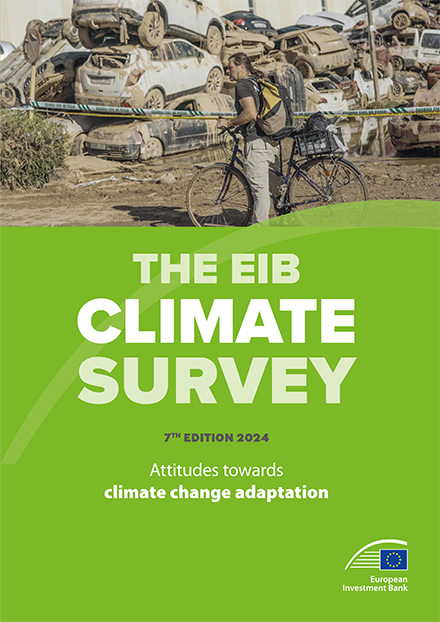
The EIB Climate Survey: Attitudes towards climate change adaptation
The seventh annual EIB Climate Survey provides valuable insight into how people view the challenges and opportunities of adapting to climate change in 2024.
European Investment Bank

Climate change poses profound challenges that are reshaping priorities across Europe, with a growing focus on both mitigation and adaptation. European citizens see climate change as a critical issue affecting their countries, with notable differences in urgency between western and eastern regions. Adapting to climate change is widely recognised as an economic opportunity that not only addresses environmental concerns, but also stimulates local economies and creates jobs.
As extreme weather events become more frequent, European citizens increasingly face direct impacts on their lives, from transport disruption to health risks. Over the past five years, a majority of Europeans report experiencing negative impacts from climate-related events, particularly in the South and East, where extreme weather is most intense.
The 7th Climate Survey from the European Investment Bank (EIB) looks at how EU countries are approaching climate change. It examines how businesses, citizens, and governments are dealing with environmental issues like global warming and the need for green energy and sustainability. The survey gathers opinions from people across the EU to understand their views on climate change and the steps being taken to combat it.
Measuring public awareness and support for adaptation initiatives helps policymakers and businesses allocate resources effectively and encourages investments that drive growth while addressing climate risks. Identifying vulnerable regions enables targeted policies and resilience measures, offering practical support to communities and reducing long-term costs. By understanding public preferences and ethical concerns, policies can better align with community expectations, fostering trust and engagement. This approach ensures targeted interventions for the most vulnerable populations, promoting a more equitable and resilient response to climate challenges.
The EIB’s Climate Survey is important because it provides a detailed view of public attitudes towards climate change across Europe. The survey’s findings also show how ready people are to invest in and adopt green solutions, and what barriers are slowing down progress.
This information helps the EU set realistic goals and policies for reducing emissions and promoting green investments. It also shows where the EU can improve in educating and encouraging citizens and businesses to take climate action. As the world faces increasing environmental challenges, it is vital that EU countries take the right steps and work together to reduce their carbon footprint and transition to a greener, more sustainable future.
Key Takeaways:
This year we have seen the tragic impact of extreme weather events in Central Europe and most recently in my own country Spain where many have lost their lives and thousands made homeless. From Pakistan to the Caribbean and North Carolina the impact of climate change is being felt across the globe. The survey released today confirms that people know we must act now to adapt to and mitigate the effects of climate change. An orderly transition also makes the most economic sense. Every €1 invested in prevention and resilience saves between €5 and €7 in repairing damage.
Adapting to climate change is essential, not only to protect lives, but also to seize a significant economic opportunity that will directly support the well-being of Europeans. By making the necessary investments today, we can protect communities, create quality jobs and strengthen local economies. Acting quickly will increase the resilience of our societies and reduce the long-term costs of inaction. For the EIB Group, adaptation is a key priority. We stand ready to provide financing and advisory services to strengthen the climate resilience of regions, cities and businesses.
The seventh annual EIB Climate Survey provides valuable insight into how people view the challenges and opportunities of adapting to climate change in 2024.
Read a summary and key findings from the 7th EIB Climate Survey (2024-25).
Click for expanded view.