All Stories

  1. Aging affects the mechanical interaction between microplastics and lipid bilayers
  2. Antifungal versus antibacterial defence of insect wings
  3. Microplastics destabilize lipid membranes by mechanical stretching
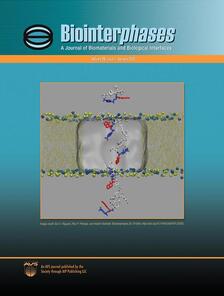
  4. Front Cover
  5. Protein corona modulates interaction of spiky nanoparticles with lipid bilayers
  6. Deep learning: step forward to high‐resolution in vivo shortwave infrared imaging
  7. Deep learning: step forward to high-resolution in vivo shortwave infrared imaging
  8. Antibacterial Action of Nanoparticles by Lethal Stretching of Bacterial Cell Membranes
  9. Mechano-bactericidal actions of nanostructured surfaces
  10. Neural network learns physical rules for copolymer translocation through amphiphilic barriers
  11. The multi-faceted mechano-bactericidal mechanism of nanostructured surfaces
  12. Tunable morphological changes of asymmetric titanium nanosheets with bactericidal properties
  13. Unexpected Cholesterol-Induced Destabilization of Lipid Membranes near Transmembrane Carbon Nanotubes
  14. Shape-Adaptive Single-Chain Nanoparticles Interacting with Lipid Membranes
  15. Macromolecular inversion-driven polymer insertion into model lipid bilayer membranes
  16. Simulations of Protein Adsorption on Nanostructured Surfaces
  17. Imaging the air-water interface: Characterising biomimetic and natural hydrophobic surfaces using in situ atomic force microscopy
  18. The pyrrolopyrimidine colchicine-binding site agent PP-13 reduces the metastatic dissemination of invasive cancer cells in vitro and in vivo
  19. Interaction of Giant Unilamellar Vesicles with the Surface Nanostructures on Dragonfly Wings
  20. High-throughput 3D visualization of nanoparticles attached to the surface of red blood cells
  21. The idiosyncratic self-cleaning cycle of bacteria on regularly arrayed mechano-bactericidal nanostructures
  22. Tension-Induced Translocation of an Ultrashort Carbon Nanotube through a Phospholipid Bilayer
  23. Bridging molecular simulation models and elastic theories for amphiphilic membranes
  24. Pillars of Life: Is There a Relationship between Lifestyle Factors and the Surface Characteristics of Dragonfly Wings?
  25. High Aspect Ratio Nanostructures Kill Bacteria via Storage and Release of Mechanical Energy
  26. Structure and Chemical Organization in Damselfly Calopteryx haemorrhoidalis Wings: A Spatially Resolved FTIR and XRF Analysis with Synchrotron Radiation
  27. Study of melanin localization in the mature maleCalopteryx haemorrhoidalisdamselfly wings
  28. Mechano-bactericidal mechanism of graphene nanomaterials
  29. Pheochromocytoma (PC12) Cell Response on Mechanobactericidal Titanium Surfaces
  30. Nanomaterial interactions with biomembranes: Bridging the gap between soft matter models and biological context
  31. Subtle Variations in Surface Properties of Black Silicon Surfaces Influence the Degree of Bactericidal Efficiency
  32. The Effect of Coatings and Nerve Growth Factor on Attachment and Differentiation of Pheochromocytoma Cells
  33. The effect of a high frequency electromagnetic field in the microwave range on red blood cells
  34. Apatite nanoparticles strongly improve red blood cell cryopreservation by mediating trehalose delivery via enhanced membrane permeation
  35. Bactericidal activity of self-assembled palmitic and stearic fatty acid crystals on highly ordered pyrolytic graphite
  36. GPU implementation of the Rosenbluth generation method for static Monte Carlo simulations
  37. Design of Hydrophobic Nanoparticles for Spontaneous Translocation through Lipid Membranes
  38. Designing Membrane-Active Nanoparticles: What are the Control Parameters?
  39. The susceptibility of Staphylococcus aureus CIP 65.8 and Pseudomonas aeruginosa ATCC 9721 cells to the bactericidal action of nanostructured Calopteryx haemorrhoidalis damselfly wing surfaces
  40. Thermal Tunneling of Homopolymers through Amphiphilic Membranes
  41. Dynamic studies of the interaction of a pH responsive, amphiphilic polymer with a DOPC lipid membrane
  42. Direct proof of spontaneous translocation of lipid-covered hydrophobic nanoparticles through a phospholipid bilayer
  43. Adsorption of Human Plasma Albumin and Fibronectin onto Nanostructured Black Silicon Surfaces
  44. “Race for the surface”: eukaryotic cells can win
  45. The Bioeffects Resulting from Prokaryotic Cells and Yeast Being Exposed to an 18 GHz Electromagnetic Field
  46. Peroxidised phospholipid bilayers: insight from coarse-grained molecular dynamics simulations
  47. Mechanism of dynamic reorientation of cortical microtubules due to mechanical stress
  48. Graphene Induces Formation of Pores That Kill Spherical and Rod-Shaped Bacteria
  49. Self-organised nanoarchitecture of titanium surfaces influences the attachment of Staphylococcus aureus and Pseudomonas aeruginosa bacteria
  50. Efficient and Stable Method to Solve Poisson–Boltzmann Equation with Steep Gradients
  51. General model of phospholipid bilayers in fluid phase within the single chain mean field theory
  52. Lipid oxidation induces structural changes in biomimetic membranes
  53. Nanotopography as a trigger for the microscale, autogenous and passive lysis of erythrocytes
  54. Bactericidal activity of black silicon
  55. IPEC Solver: Numerical simulation tool to study inter-polyelectrolyte complexation
  56. Biophysical Model of Bacterial Cell Interactions with Nanopatterned Cicada Wing Surfaces
  57. Bacterial attachment on sub-nanometrically smooth titanium substrata
  58. Selective bactericidal activity of nanopatterned superhydrophobic cicada Psaltoda claripennis wing surfaces
  59. Nanoparticle-Induced Permeability of Lipid Membranes
  60. Natural Bactericidal Surfaces: Mechanical Rupture of Pseudomonas aeruginosa Cells by Cicada Wings
  61. Critical adsorption controls translocation of polymer chains through lipid bilayers and permeation of solvent
  62. Degradation versus Self-Assembly of Block Co-polymer Micelles
  63. Biomolecule Surface Patterning May Enhance Membrane Association
  64. Homo-polymers with balanced hydrophobicity translocate through lipid bilayers and enhance local solvent permeability
  65. Self-assembly of spherical interpolyelectrolyte complexes from oppositely charged polymers
  66. Differential attraction and repulsion of Staphylococcus aureus and Pseudomonas aeruginosa on molecularly smooth titanium films
  67. Equilibrium Insertion of Nanoscale Objects into Phospholipid Bilayers
  68. Coupled Concentration Polarization and Electroosmotic Circulation near Micro/Nanointerfaces: Taylor–Aris Model of Hydrodynamic Dispersion and Limits of Its Applicability
  69. Accurate Critical Micelle Concentrations from a Microscopic Surfactant Model
  70. Surface Patterning of Carbon Nanotubes Can Enhance Their Penetration through a Phospholipid Bilayer
  71. Aggregation of amphiphilic polymers in the presence of adhesive small colloidal particles
  72. Can a Carbon Nanotube Pierce through a Phospholipid Bilayer?
  73. Coarse-grained models of phospholipid membranes within the single chain mean field theory
  74. Collision induced spatial organization of microtubules
  75. Micellization of Sliding Polymer Surfactants
  76. Sliding Grafted Polymer Layers
  77. Self-consistent field theory of brushes of neutral water-soluble polymers
  78. Signatures of a Concentration-Dependent Floryχ Parameter: Swelling and Collapse of Coils and Brushes
  79. Self-assembled aggregates in the gravitational field: Growth and nematic order
  80. Concentration Dependence of the Flory χ Parameter within Two-State Models
  81. Polymer–surfactant complexes: solubilization of polymeric globule by surfactants
  82. Nematic ordering of rigid rods in a gravitational field