All Stories

  1. In(II) the Void: Mausolate Complexes of Divalent Diindium
  2. Ask Away! Empowering Students to Ask Anonymous In-Class Questions
  3. Ligand Substitution, Catalyst Activation, and Oxidative Addition Studies of a Stable Dialkyl Palladium Precatalyst
  4. An electrospray-active N-heterocyclic carbene ligand for real-time analysis of organometallic reactions
  5. BH3·SMe2 addition enables molar mass control via chain stabilization in phosphine–borane dehydropolymerization
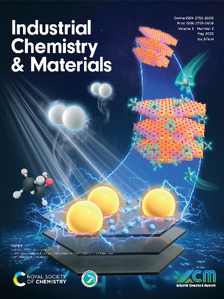
  6. Bias enhanced electro-photocatalysis on TiO2 nanoporous materials for decomposition of forever chemicals in saltwater
  7. Comparison of PGSE NMR and ESI-MS measurements on methylaluminoxane
  8. Bias Enhanced Electro-Photocatalysis on TiO2 Nanoporous Materials for Decomposition of Forever Chemicals in Saltwater
  9. The amenability of different solvents to electrospray ionization mass spectrometry
  10. A Brilliantly Simple Classroom Response System
  11. Protonation Effects on the Benzoxazine Formation Pathways and Products Distribution
  12. The amenability of different solvents to electrospray ionization mass spectrometry
  13. Comparative Assessment of ESI‐MS Softness for Inorganic Complexes: How Soft Is Your ESI‐MS?
  14. Electrospray ionization tandem mass spectrometry of 4‐aryl‐3,4‐dihydrocoumarins
  15. MoleculAR: An Augmented Reality Application for Understanding 3D Geometry
  16. OptiMS: An Accessible Program for Automating Mass Spectrometry Parameter Optimization and Configuration
  17. Mechanistic study of the atomic layer deposition of cobalt: a combined mass spectrometric and computational approach
  18. A Large-cavity Diborate Clathrochelate with Potential Application as a Delivery Vehicle for Large Metal Ions in Nuclear Medicine
  19. Poisonous Truth about the Mercury Drop Test: The Effect of Elemental Mercury on Pd(0) and Pd(II)ArX Intermediates
  20. The poisonous truth about the mercury drop test: the effect of elemental mercury on Pd(0) and Pd(II)ArX intermediates
  21. Competitive Isomerization and Catalyst Decomposition During Ring-Closing Metathesis
  22. A highly efficient photocatalytic system for environmental applications based on TiO2 nanomaterials
  23. Competitive isomerization and catalyst decomposition during ring-closing metathesis
  24. Continuous addition kinetic elucidation: catalyst and reactant order, rate constant, and poisoning from a single experiment
  25. Understanding the color change of the solutions of Cp 2 TiCl upon addition of water
  26. A billion times smaller than us: helping students comprehend the molecular scale
  27. Continuous Addition Kinetic Elucidation: Catalyst and Reactant Order, Rate Constant, and Poisoning from a Single Experiment
  28. Continuous Addition Kinetic Elucidation: Catalyst and Reactant Order, Rate Constant, and Poisoning from a Single Experiment
  29. Cover Picture: Pressurized Sample Infusion (Chem. Methods 1/2022)
  30. Pressurized Sample Infusion
  31. Handling considerations for the mass spectrometry of reactive organometallic compounds
  32. Pressurized Sample Infusion
  33. Are Methylaluminoxane Activators Sheets?
  34. Spectroscopic Studies of Synthetic Methylaluminoxane: Structure of Methylaluminoxane Activators
  35. A Mechanistic Investigation of the Suzuki Polycondensation Reaction Using MS/MS Methods
  36. A Mechanistic Investigation of the Suzuki Polycondensation Reaction Using MS/MS Methods
  37. Standardized Stirring for Small Scale Surveys
  38. Dynamic Ion Speciation during the Hydrolysis of Aryltrifluoroborates**
  39. Real-time analysis of methylalumoxane formation
  40. A mechanistic investigation of the Pd-catalyzed cross-coupling between N-tosylhydrazones and aryl halides
  41. A mechanistic investigation of the Suzuki polycondensation reaction using MS/MS methods
  42. Regio- and diastereoselective Pd-catalyzed aminochlorocyclization of allylic carbamates: scope, derivatization, and mechanism
  43. The signal-to-noise issue in mass spectrometric analysis of polymers
  44. Standardized Stirring for Small Scale Surveys
  45. Standardized Stirring for Small Scale Surveys
  46. Trichloro(Dinitrogen)Platinate(II)
  47. Inexpensive Open Source Laser Cut Model Kits for the Teaching of Molecular Geometry
  48. Inexpensive Open Source Laser Cut Model Kits for the Teaching of Molecular Geometry
  49. Real-Time Analysis of Methylalumoxane Formation
  50. Real-Time Analysis of Methylalumoxane Formation
  51. Disulfonated Xantphos for Mass Spectrometric Mechanistic Analysis
  52. Disulfonated Xantphos for Mass Spectrometric Mechanistic Analysis
  53. Magnesium-Accelerated Maillard Reactions Drive Differences in Adjunct and All-Malt Brewing
  54. Dynamic Ion Speciation During Hydrolysis of Aryltrifluoroborates
  55. Dynamic Ion Speciation During Hydrolysis of Aryltrifluoroborates
  56. Catalyst Deactivation Processes during 1-Hexene Polymerization
  57. Chromate Conversion Coating and Alternatives as Corrosion-Resistant Treatments for Metal Parts
  58. Chromate Conversion Coating and Alternatives as Corrosion-Resistant Treatments for Metal Parts
  59. Trichloro(Dinitrogen)platinate(II)
  60. Trichloro(Dinitrogen)platinate(II)
  61. Catalyst Deactivation Processes During 1-Hexene Polymerization
  62. Catalyst Deactivation Processes During 1-Hexene Polymerization
  63. Real-Time Monitoring of a Cobalt-Mediated One-Pot Transition Metal Catalyzed Multicomponent Reaction
  64. Real-Time Monitoring of a Cobalt-Mediated One-Pot Transition Metal Catalyzed Multicomponent Reaction
  65. Gas-Phase Oxidation of Reactive Organometallic Ions
  66. Gas-Phase Oxidation of Reactive Organometallic Ions
  67. Reactive metallocene cations as sensitive indicators of gas-phase oxygen and water
  68. Magnesium-Accelerated Maillard Reactions Drive Differences in Adjunct and All-Malt Brewing
  69. Magnesium-Accelerated Maillard Reactions Drive Differences in Adjunct and All-Malt Brewing
  70. Orbital Shaped Standing Waves Using Chladni Plates
  71. Orbital Shaped Standing Waves Using Chladni Plates
  72. An Information-Rich Graphical Representation of Catalytic Cycles
  73. Experimental Strategies for Avoiding Saturation Effects in ESI-MS
  74. Experimental Strategies for Avoiding Saturation Effects in ESI-MS
  75. Step-by-Step Real Time Monitoring of a Catalytic Amination Reaction
  76. Step-by-Step Real Time Monitoring of a Catalytic Amination Reaction
  77. Structure, Anion, and Solvent Effects on Cation Response in ESI-MS
  78. An Information-Rich Graphical Representation of Catalytic Cycles
  79. An Information-Rich Graphical Representation of Catalytic Cycles
  80. Assigning the ESI Mass Spectra of Organometallic and Coordination Compounds
  81. PythoMS: A Python Framework To Simplify and Assist in the Processing and Interpretation of Mass Spectrometric Data
  82. Interaction of Neutral Donors with Methylaluminoxane
  83. Confounding contaminants in mass spectrometric reaction monitoring
  84. Structure, anion, and solvent effects on cation response in ESI-MS
  85. Structure, anion, and solvent effects on cation response in ESI-MS
  86. Interaction of Neutral Donors with Methylaluminoxane
  87. Interaction of Neutral Donors with Methylaluminoxane
  88. Open-Source Laser-Cut-Model Kits for the Teaching of Molecular Geometry
  89. How Does Methylaluminoxane Work?
  90. Step-by-step real time monitoring of a catalytic amination reaction
  91. Confounding contaminants in mass spectrometric reaction monitoring
  92. Confounding contaminants in mass spectrometric reaction monitoring
  93. Competitive Ligand Exchange and Dissociation in Ru Indenyl Complexes
  94. Real-Time Mass Spectrometric Investigations into the Mechanism of the Suzuki–Miyaura Reaction
  95. PythoMS: A Python Framework to Simplify and Assist in the Processing and Interpretation of Mass Spectrometric Data
  96. Oxidation of Methylalumoxane Oligomers: A Theoretical Study Guided by Mass Spectrometry
  97. Modifying Methylalumoxane via Alkyl Exchange
  98. Competitive Ligand Exchange and Dissociation in Ru Indenyl Complexes
  99. Ionization methods for the mass spectrometry of organometallic compounds
  100. Frontispiece: Oxidation of Methylalumoxane Oligomers
  101. Oxidation of Methylalumoxane Oligomers
  102. (Ge2P2)2−: a binary analogue of P4as a precursor to the ternary cluster anion [Cd3(Ge3P)3]3−
  103. Synthesis, characterization and mass-spectrometric analysis of [LSn(IV)F4−x]x+ salts [L = tris ((1-ethyl-benzoimidazol-2-yl)methyl)amine, x = 1–4]
  104. Modifying methylalumoxane via alkyl exchange
  105. Oxidation of Titanocene(III): The Deceptive Simplicity of a Color Change
  106. Additive and Aging Effects on Methylalumoxane Oligomers
  107. Determination of n-Alkanes in Jet Fuel by Cold-electron Ionization Gas Chromatography–Mass Spectrometry
  108. Real-time analysis of Pd2(dba)3 activation by phosphine ligands
  109. Mass transfer and convection effects in small-scale catalytic hydrogenation
  110. Phenol-selective mass spectrometric analysis of jet fuel
  111. Simultaneous Orthogonal Methods for the Real-Time Analysis of Catalytic Reactions
  112. Alkylation of [Pt2(μ-S)2(PPh3)4] with boronic acid derivatives
  113. Applying Hand-Held 3D Printing Technology to the Teaching of VSEPR Theory
  114. Reactivity of [Pt2(μ-S)2(PPh3)4] towards activated aliphatic bromoacyl electrophiles: Formation of mono-, homodi-, heterodi- and intramolecular-bridged alkylated products
  115. Mass spectrometric characterization of oligomeric phosphaalkenes
  116. Mass Spectrometry of Organoaluminum Derivatives
  117. Compounds containing P-P bonds decompose in many different ways
  118. Selective mass spectrometric analysis of thiols using charge-tagged disulfides
  119. Electron ionization mass spectrometric analysis of air- and moisture-sensitive organometallic compounds
  120. Reversible Mechanical Interlocking of D-Shaped Molecular Karabiners bearing Coordination-Bond Loaded Gates: Route to Self-Assembled [2]Catenanes
  121. How the capillary tip position affects relative ion intensity in ESI-MS
  122. Party balloons provide the driving force for continuous analysis
  123. Cationic rhodium complexes add hydrogen to alkynes much faster than to alkenes
  124. Relative binding affinities of fluorobenzene ligands in cationic rhodium bisphosphine η6–fluorobenzene complexes probed using collision-induced dissociation
  125. Mechanistic insights from mass spectrometry: examination of the elementary steps of catalytic reactions in the gas phase
  126. Mechanistic features of the copper-free Sonogashira reaction from ESI-MS
  127. Mass Spectrometric Characterization of Methylaluminoxane‐Activated Metallocene Complexes
  128. ChemInform Abstract: The Application of Electrospray Ionization Mass Spectrometry to Homogeneous Catalysis
  129. The application of electrospray ionization mass spectrometry to homogeneous catalysis
  130. Solvent effects on surface activity of aggregate ions in electrospray ionization
  131. ChemInform Abstract: Practical Approaches to the ESI-MS Analysis of Catalytic Reactions
  132. Mass Spectrometric Transmutation of Fullerenes
  133. Electrostatic and Non‐covalent Interactions in Dicationic Imidazolium–Sulfonium Salts with Mixed Anions
  134. A multi-pronged mechanistic study of the phosphine-mediated conjugate addition of an alcohol to an acetylenic ester
  135. Exploring the mechanism of the hydroboration of alkenes by amine–boranes catalysed by [Rh(xantphos)]+
  136. Practical approaches to the ESI-MS analysis of catalytic reactions
  137. Gas phase reactivity of iron pentacarbonyl with anionic metal clusters
  138. Oxidative Additions of Aryl Halides to Palladium Proceed through the Monoligated Complex
  139. The Color-Changing Sports Drink: An Ingestible Demonstration
  140. An Unexpected Pathway for Ligand Substitution in an Aryl Halide Complex of Palladium
  141. Mass Spectrometric Characterization of Methylaluminoxane
  142. Characterization of Isobutylaluminoxanes by Electrospray Ionization Mass Spectrometry
  143. Synthesis and characterization of a new class of anti-angiogenic agents based on ruthenium clusters
  144. Fixed-charge phosphine ligands to explore gas-phase coinage metal-mediated decarboxylation reactions
  145. A mechanistic investigation of hydrodehalogenation using ESI-MS
  146. A detailed kinetic analysis of rhodium-catalyzed alkyne hydrogenation
  147. 1,8-Bis(dimethylamino)-2-(4-methoxyphenyl)naphthalene: An electrospray-active analogue for η6-coordinating ligands
  148. Pressurized sample infusion: An easily calibrated, low volume pumping system for ESI-MS analysis of reactions
  149. Proton Sponge Phosphanes: Reversibly Chargeable Ligands for ESI‐MS Analysis
  150. The Pauson-Khand Reaction: A Gas-Phase and Solution-Phase Examination Using Electrospray Ionization Mass Spectrometry
  151. Mass Spectrometric and Theoretical Study of Polyiodides: The Connection between Solid State, Solution, and Gas Phases
  152. 3,3′-N,N′-Bis(amino)-2,2′-bipyridine — An unusually methylation-resistant amine
  153. Powerful Insight into Catalytic Mechanisms through Simultaneous Monitoring of Reactants, Products, and Intermediates
  154. Powerful Insight into Catalytic Mechanisms through Simultaneous Monitoring of Reactants, Products, and Intermediates
  155. ChemInform Abstract: Ionic Liquids: Solutions for Electrospray IoniZation Mass Spectrometry
  156. Blurring the line between solution and the gas phase: collision-induced dissociation of hypersolvated lanthanide trications provides insights into solution acidity
  157. Using NMR and ESI‐MS to Probe the Mechanism of Silane Dehydrocoupling Catalyzed by Wilkinson's Catalyst
  158. Pressurized Sample Infusion for the Continuous Analysis of Air- And Moisture-Sensitive Reactions Using Electrospray Ionization Mass Spectrometry
  159. 1,3,5-Triazaadamantan-7-amine
  160. Mass spectrometry in organometallic chemistry
  161. Mass Spectrometry and Gas‐Phase Chemistry of Non‐Covalent Complexes. Supramolecular Chemistry in the Gas Phase. Wiley‐Interscience Series on Mass Spectrometry. Von Christoph A. Schalley und Andreas Springer.
  162. Mass Spectrometry and Gas‐Phase Chemistry of Non‐Covalent Complexes. Supramolecular Chemistry in the Gas Phase. Wiley‐Interscience Series on Mass Spectrometry. By Christoph A. Schalley and Andreas Springer.
  163. Mono-alkylated bisphosphines as dopants for ESI-MS analysis of catalytic reactions
  164. Direct observation of key intermediates by negative-ion electrospray ionisation mass spectrometry in palladium-catalysed cross-coupling
  165. Bisphosphine monoxides with o-phenylene backbones in Pt, Pd and Fe complexes
  166. Ionic liquids: Solutions for Electrospray Ionisation Mass Spectrometry
  167. Distannoxane speciation during esterification catalysis: revealing insights provided by electrospray ionization mass spectrometry
  168. Evidence of asymmetric cation solvation from the instability of [Pb(H2O)n]2+ complexes
  169. Collision-induced dissociation of protonated nanodroplets
  170. Gas-phase reactivity of ruthenium carbonyl cluster anions
  171. Insights into the Post‐Translational Methylation of Arginine from Studies of Guanidinium–Water Nanodroplets
  172. Coupling an Electrospray Ionization Mass Spectrometer with a Glovebox: A Straightforward, Powerful, and Convenient Combination for Analysis of Air-Sensitive Organometallics
  173. Book Review of Inorganic Mass Spectrometry: Principles and Applications
  174. (Chloromethyl)pentacarbonylmanganese(I): a crystal structure with a non-crystallographic centre of symmetry
  175. ChemInform Abstract: Reversible Binding of Dihydrogen in Multimetallic Complexes
  176. Charged ligands for catalyst immobilisation and analysis
  177. Reversible Binding of Dihydrogen in Multimetallic Complexes
  178. Investigation into the formation of heteronuclear clusters of formula [{Ru6C(CO)16Ag2X}2]2− (X = Cl, Br or I)
  179. Sequential Reduction of High Hydride Count Octahedral Rhodium Clusters [Rh6(PR3)6H12][BArF4]2:  Redox-Switchable Hydrogen Storage
  180. Direct observation of ion evaporation from a triply charged nanodroplet
  181. Formaldehyde elimination from methoxylated transition metal carbonyl clusters
  182. The energetics of the X2 + X– → X3– equilibrium (X = Cl, Br, I) in aqueous and nonaqueous solution
  183. Storing and Releasing Hydrogen with a Redox Switch
  184. Storing and Releasing Hydrogen with a Redox Switch
  185. High Hydride Count Rhodium Octahedra, [Rh6(PR3)6H12][BArF4]2: Synthesis, Structures, and Reversible Hydrogen Uptake under Mild Conditions
  186. Energy-dependent Electrospray Ionisation Mass Spectrometry of Carbonyl Clusters
  187. Ionic liquids enable electrospray ionisation mass spectrometry in hexane
  188. Proton sponge phosphines: electrospray-active ligands
  189. Hydrogen Sponge? A Heteronuclear Cluster that Absorbs Large Quantities of Hydrogen
  190. Holding onto Lots of Hydrogen: A 12‐Hydride Rhodium Cluster That Reversibly Adds Two Molecules of H2
  191. Holding onto Lots of Hydrogen: A 12‐Hydride Rhodium Cluster That Reversibly Adds Two Molecules of H2
  192. Wasserstoffschwamm? Ein heteronuclearer Cluster, der große Wasserstoffmengen absorbiert
  193. Hydrogen Sponge? A Heteronuclear Cluster That Absorbs Large Quantities of Hydrogen
  194. EDit: a computer program to assist in the presentation of energy‐dependent mass spectra
  195. Mass Spectrometry of Inorganic, Coordination and Organometallic Compounds
  196. An Octahedral Rhodium Cluster with Six Phosphine and 12 Hydride Ligands and 10 Too Few Electrons
  197. An Octahedral Rhodium Cluster with Six Phosphine and 12 Hydride Ligands and 10 Too Few Electrons
  198. Ein oktaedrischer Rhodium-Cluster mit sechs Phosphan- und zwölf Hydridliganden, dem zehn Elektronen fehlen
  199. Analysis of Low Oxidation State Transition Metal Clusters by Laser Desorption/Ionization Time-of-Flight Mass Spectrometry
  200. Direct probe electrospray (and nanospray) ionization mass spectrometry of neat ionic liquids
  201. Analysis of Coordination and Organometallic Compounds Using Photoionisation Mass Spectrometric Techniques
  202. A Strategy for Generating Naked‐Metal Clusters for Gas‐Phase Reactivity Studies by FTICR–MS
  203. A Strategy for Generating Naked‐Metal Clusters for Gas‐Phase Reactivity Studies by FTICR–MS
  204. Metal Carbonyls
  205. Fragmentation of Transition Metal Carbonyl Cluster Anions: Structural Insights from Mass Spectrometry
  206. Direct analysis of catalysts immobilised in ionic liquids using electrospray ionisation ion trap mass spectrometry
  207. Studies of polyhalide ions in aqueous and non-aqueous solution by electrospray mass spectrometry
  208. The preparation and characterisation of monomeric and linked metal carbonyl clusters containing the closo-Si2Co4 pseudo-octahedral core
  209. On the use of breakdown graphs combined with energy‐dependent mass spectrometry to provide a complete picture of fragmentation processes
  210. Collision-induced dissociation and photodetachment of singly and doubly charged anionic polynuclear transition metal carbonyl clusters: Ru3Co(CO)13−, Ru6C(CO)162−, and Ru6(CO)182−
  211. Bis[dicarbonyl(cyclopentadienyl)ferrio]mercury(II)
  212. Electrospray Mass Spectrometry
  213. Mass Spectrometric Method for the Rapid Characterization of Transition Metal Carbonyl Cluster Reaction Mixtures
  214. Book Review: Transition Metal Carbonyl Cluster Chemistry. Von Paul J. Dyson und J. Scott McIndoe
  215. Combining energy‐dependent electrospray ionisation with tandem mass spectrometry for the analysis of inorganic compounds
  216. Electrospray mass spectrometric characterization of bimetallic group 8 — Gold clusters
  217. Applications of Laser Desorption and Electrospray Ionization Mass Spectrometry at the Transition between Clusters and Colloids
  218. Spectroscopic and mass spectrometric methods for the characterisation of metal clusters
  219. Energy-dependent electrospray ionisation mass spectrometry: applications in transition metal carbonyl chemistry
  220. Formation of the highly unusual cyclic clusters [MH(CO)4]n (M = Mn, n = 4–9; M = Re, n = 4–6) under laser desorption/ionisation conditions
  221. Insights into the elimination of HCHO from the clusters [Mn(CO)m(COOMe)]− (Mn = Ru6C, m = 16; Mn = Rh6, m = 15) provided by electrospray mass spectrometry †
  222. UV laser desorption/ionisation mass spectrometry of the triruthenium clusters Ru3(CO)12−n(PPh3)n (n=1, 2 and 3)
  223. Reactivity and Characterization of Transition-Metal Carbonyl Clusters Using UV Laser Desorption Mass Spectrometry
  224. Electrospray mass spectrometry of metal carbonyl complexes †
  225. Electrospray mass spectrometric analysis of neutral metal carbonyl complexes by derivatisation with alkoxide ions